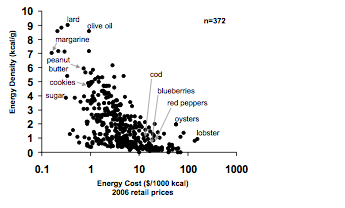
 Recent studies show that the cost of high-calorie foods are less likely to be affected by inflation and, on average, cost less than low-calorie foods. With obesity plaguing the United States, this trend may hinder low-income families from adopting a low-calorie diet. Funding from USDA’s Cooperative State Research, Education, and Extension Service (CSREES) enabled researchers at the University of Washington to examine the price trends of different food choices.
Posts Tagged ‘nutrition’
Healthy, Low-Calorie Foods Cost More on Average
Posted in Food, Nutrition and Health, tagged calorie, nutrition, obesity on 06/09/2014|
Fresh Food Program Promotes Healthy Eating Habits Among Children
Posted in Food, Nutrition and Health, tagged eating habits, farm-to-table, nutrition on 06/09/2014|
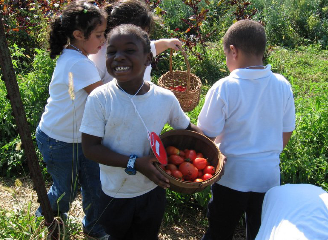 Communities across the nation are fighting the increased incidence of childhood obesity and Type II diabetes. With funding from USDA’s Cooperative State Research, Education, and Extension Service (CSREES), a group in Illinois is promoting environmental sustainability and healthy eating habits in the youngest Americans.
Gary Cuneen founded the advocacy group Seven Generations Ahead (SGA) in 2001, located in Oak Park, Ill., to find local solutions to global environmental problems. The group offers a comprehensive “farm-to-school” program called Fresh from the Farm.
From Farm to School: Improving Small Farm Viability and School Meals
Posted in Food, Nutrition and Health, tagged farm-to-table, nutrition, school meals on 06/09/2014|
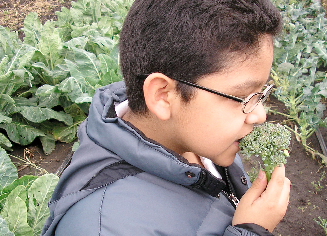 Improving the nutritional value of school meals is a growing priority among school systems across the United States. In an effort to provide a solution for school administrators, the USDA’s Cooperative State Research, Education, and Extension Service (CSREES) funded a coalition of school districts and farmers from four states to participate in a new program called “From Farm to School: Improving Small Farm Viability and School Meals.”
Farm to school programs connect schools with local farms to improve the nutrition of school meals, provide agriculture and health education, and support local farmers. The “Farm to School: Improving Small Farm Viability and School Meals” project has been a powerful catalyst to establish farm to school programs as a model to address the diet-related health issues of children while supporting small and medium-scale farmers. The program’s model allows schools to buy and feature farm fresh foods, such as fruits and vegetables, eggs, honey, meat and beans on their school lunch menus.
 EarthSpin