Feeds:
Posts
Comments

Posts Tagged ‘Climate’

A new study finds the lofted pollutants came from major European cities, but further study is required to fully understand the plastics’ transport and deposition processes.
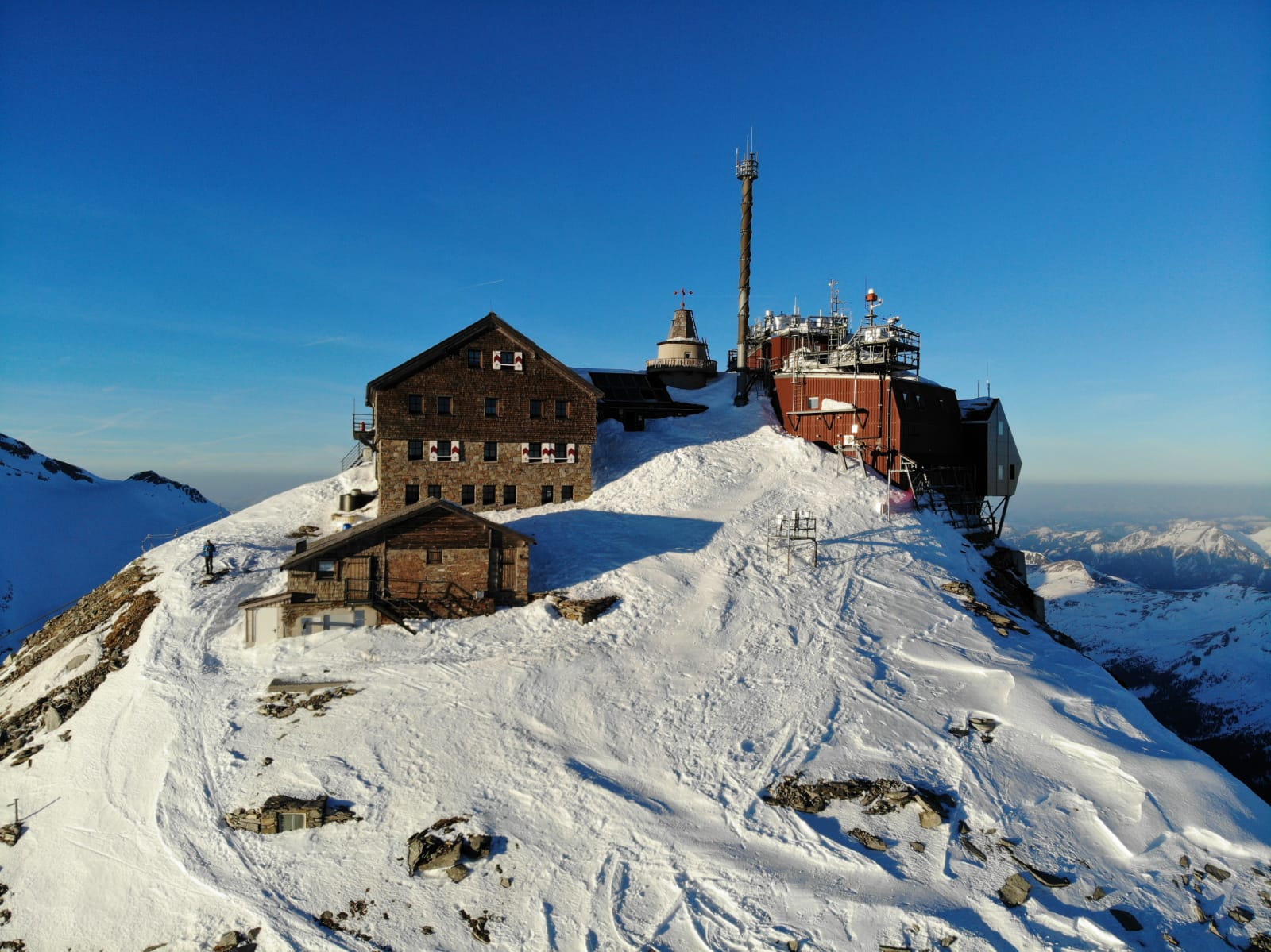
To test for the presence of nanoplastics in the Alps, researchers gathered samples of melted snow at Sonnblick Observatory, 3,106 meters above sea level. Credit: Elke Ludewig

Plastics are ubiquitous, with more than 350 million tons produced worldwide every year. The far-reaching effects of synthetic materials are also in the news, from the pile of garbage circulating in the Pacific to elephants dying from consuming nondegradable plastic waste. Now, a new study from an international team of researchers found tiny plastic particles high in the Alps.

Pervasive Plastics

Since plastics do not have a permanent environmental sink, they continue to degrade, becoming smaller until they are considered nanoplastics, which are 100 times thinner than a human hair. These fragments of plastic are tiny enough to be carried aloft and distributed by the wind. However, data on the distribution and concentration of nanoplastics are rarely reported.

Dušan Materić, a researcher at Utrecht University in the Netherlands, and colleagues were interested to see if nanoplastics were present in high-altitude, remote places, like the Alps. So they gathered 38 samples at Sonnblick Observatory from February to March in 2017. The observatory sits on a remote peak in the Austrian Central Alps, more than 3,100 meters above sea level. They focused on four commonly used plastics: polypropylene (PP), polyethylene terephthalate (PET), polyethylene (PE), and polystyrene (PS). The team used thermal-desorption proton-transfer-reaction mass spectrometry to measure and identify the tiny particles in the samples they collected. After analyses, the results were compared to 40 unique ions identified from new plastic exemplars.

(more…)

Read Full Post »

While not as menacing as the sci-fi B-movie cult classic Attack of the Killer Tomatoes, agricultural scientists have discovered a dark side to, gulp, the earthworm.

Worms may delight gardeners with their ability to aerate the soil, but these organisms are not native to the northern regions of the United States and may be responsible for altering an ecosystem that developed in a worm-free environment.

With funding from USDA’s Cooperative State Research, Education, and Extension Service (CSREES), scientists in Ohio are exploring a sinister link between earthworms and common allergens.

(more…)

Read Full Post »

Carbon dioxide is a greenhouse gas that is believed to raise global temperatures. In the past 200 years, carbon dioxide has increased by 35 percent. Scientists are working with natural resource managers to better understand how plants respond to changes in atmospheric carbon dioxide to maximize plant productivity.

(more…)

Read Full Post »

Pond Scum Becomes Biofuel

Corn, switchgrass, sugar cane, and poplar trees – each has been suggested as potential feedstock options for biofuel production. Using these feedstocks efficiently is hampered by identifying the right bug to break down the plant biomass, locating land to grow these crops, and finding the huge volume of water needed to produce the ethanol. Scientists in the heartland have bypassed plants and moved to an alternate feedstock–algae.

Algae are small single-celled organisms that, like plants on land, capture the energy from the sun and store it as chemical energy during photosynthesis. Unlike plants on land, algae do not have the more complicated biomass that makes corn, switchgrass, and all of the other feedstocks difficult to break down.

(more…)

Read Full Post »