Feeds:
Posts
Comments

Posts Tagged ‘biofuel’

Fungi Aid Biofuel Production

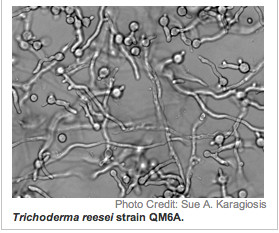
Screen shot 2014-06-09 at 4.28.11 PMTrichoderma reesei, a fungus found in soils throughout the world, produces a cellulose-degrading enzyme to break down plant material in order to obtain nutrients.

“Unlike animals that produce enzymes in the gut to breakdown food, fungi secrete enzymes into their environment to break down the surrounding carbon and nitrogen so it can absorb the nutrients as food,” said the study’s lead author Scott Baker.

The fungus frustrated army officials in the South Pacific theatre during World War II, because enzymes accelerated the disintegration of the cotton fabric in the fatigues and tents.
(more…)

Read Full Post »

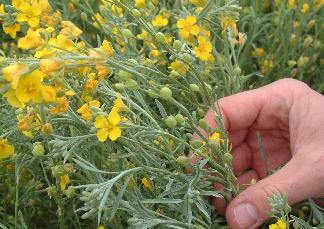
Screen shot 2014-06-09 at 4.00.38 PMWhile consumers are lately hearing a lot about corn-based ethanol, a group of scientists advocates using mustard as a lotion, paint, biodiesel additive and lubricant.

With funding from USDA’s Cooperative State Research, Education, and Extension Service (CSREES), a research group in Texas, Arizona and Illinois is looking at Lesquerella, a member of the mustard family, as a potential source for energy.

(more…)

Read Full Post »

Screen shot 2014-06-09 at 3.47.19 PMWhat do you get when you cross E. coli with biofuel waste products?  A new process that may revolutionize the economic development of the growing biofuel industry.

Biofuels represent the best sustainable, secure, and renewable alternative to fossil fuels. Unfortunately, biofuel production is beset by the same problem as traditional petroleum refining – excess waste. In traditional refining, only about 60 percent of the crude oil becomes gasoline, the rest is used to make other products. Similarly, as biofuel production increases, the market is being flooded with its waste byproducts, specifically glycerin, also known as glycerol.

Glycerin is cheap and abundant in the current marketplace. Although there are many potential uses for the substance, it is difficult to break it down into products with greater economic value.

(more…)

Read Full Post »

Pond Scum Becomes Biofuel

Corn, switchgrass, sugar cane, and poplar trees – each has been suggested as potential feedstock options for biofuel production. Using these feedstocks efficiently is hampered by identifying the right bug to break down the plant biomass, locating land to grow these crops, and finding the huge volume of water needed to produce the ethanol. Scientists in the heartland have bypassed plants and moved to an alternate feedstock–algae.

Algae are small single-celled organisms that, like plants on land, capture the energy from the sun and store it as chemical energy during photosynthesis. Unlike plants on land, algae do not have the more complicated biomass that makes corn, switchgrass, and all of the other feedstocks difficult to break down.

(more…)

Read Full Post »