Feeds:
Posts
Comments
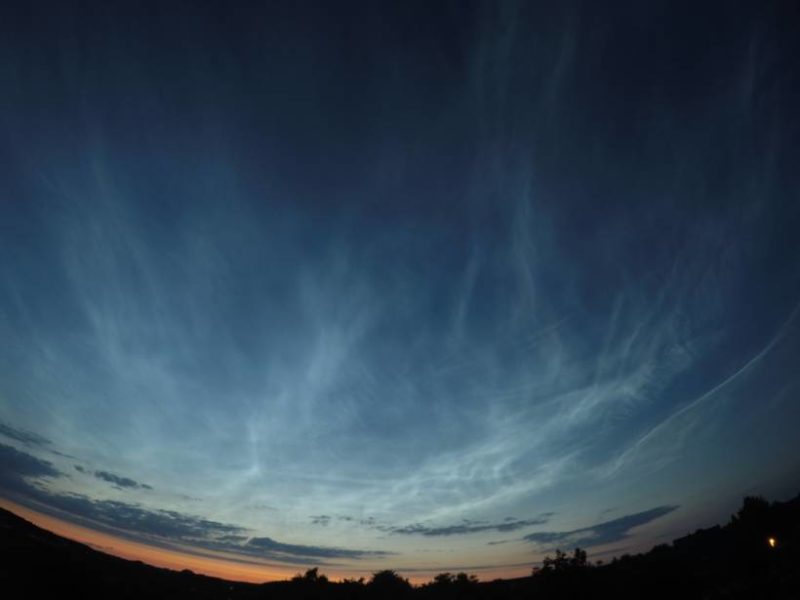
An array of noctilucent clouds formed over Kühlungsborn, Germany, on the evening of 21 June 2019.
Credit: Gerd Baumgarten, Leibniz-Institute of Atmospheric Physics

High in the atmosphere, noctilucent clouds are ethereal wisps of ice that form along the mesopause, where the mesosphere transitions into the thermosphere. Familiar in the summer polar sky, these clouds are less common at lower latitudes. Kühlungsborn, a small town in northern Germany, lies at the edge where these unique clouds can survive. In 2019, an unusually large number of noctilucent clouds (NLCs) formed over the town in the early summer, many of which lingered in the night sky.

A research team at the Leibniz-Institute of Atmospheric Physics at Rostock University, Germany, set out to understand the atmospheric dynamics that led to this unusual event. The results of the team’s study were published in the March issue of the Journal of Atmospheric and Solar-Terrestrial Physics.

“The [historic noctilucent cloud] data set is one of the very few that reach back 140 years.”“Noctilucent clouds are highly sensitive to temperature and are an interesting tracer for what is going on in the upper mesosphere,” said Michael Gerding of the Leibniz-Institute and lead author of the study. “The [historic noctilucent cloud] data set is one of the very few that reach back 140 years.”

Continue Reading »
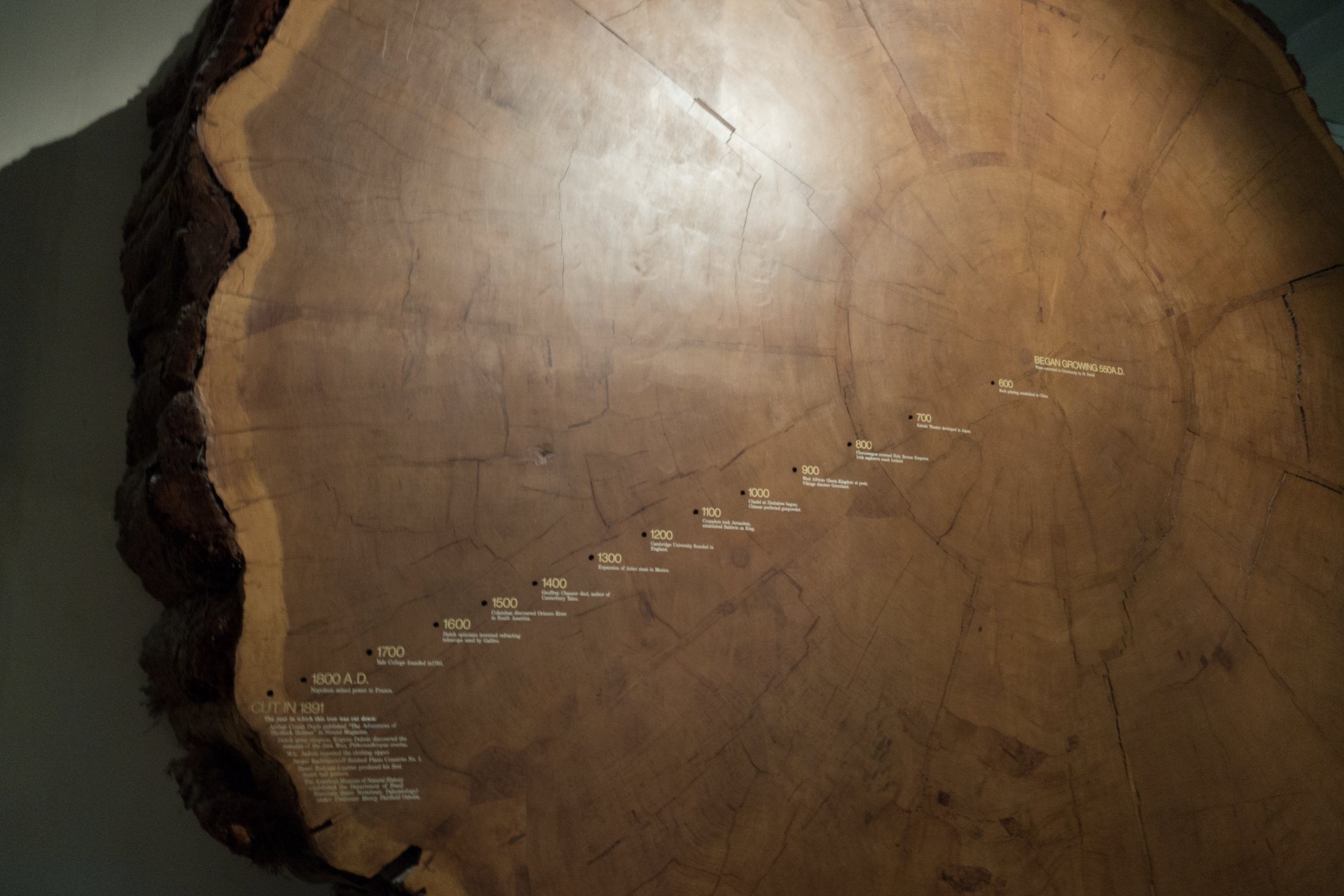
A method using nonpooled, continuous stable carbon and oxygen isotopes recorded in oak trees benefits climate reconstructions.

Thomas Quine, CC BY 2.0 https://creativecommons.org/licenses/by/2.0, via Wikimedia Commons

For decades, the widths of tree rings have offered a precise window into past regional environmental conditions. The oxygen (δ18O) and carbon (δ13C) isotopic signatures of wood cellulose provide an additional, nuanced environmental fingerprint that records subtle shifts in temperature, precipitation, and drought conditions.

Despite the power of this approach, questions remain as to how tree species, site elevation, tree age, and preservation techniques could affect the stable isotopic values captured in the individual samples.

“To reconstruct multimillennial chronologies, samples from living trees, historical timbers, archaeological remains, and subfossil materials have to be combined,” said Otmar Urban, a scientist at the Global Change Research Institute, Czech Academy of Sciences, and first author of a new study on the value of stable isotopes in individual trees. “It could bring problems, because [this information] is usually unknown.”

To address these uncertainties, the researchers developed a new method to evaluate the variability in the stable isotopic record in individual trees. They leveraged a multimillennial tree ring chronology established in the Czech Republic, consisting of about 4,000 core samples obtained from living oaks and historical timbers of the same species. This database provides a mechanism to reconstruct climate conditions across central Europe over the past 1,500 years. The results of the study were published in the February issue of Dendrochronologia.

Continue Reading »
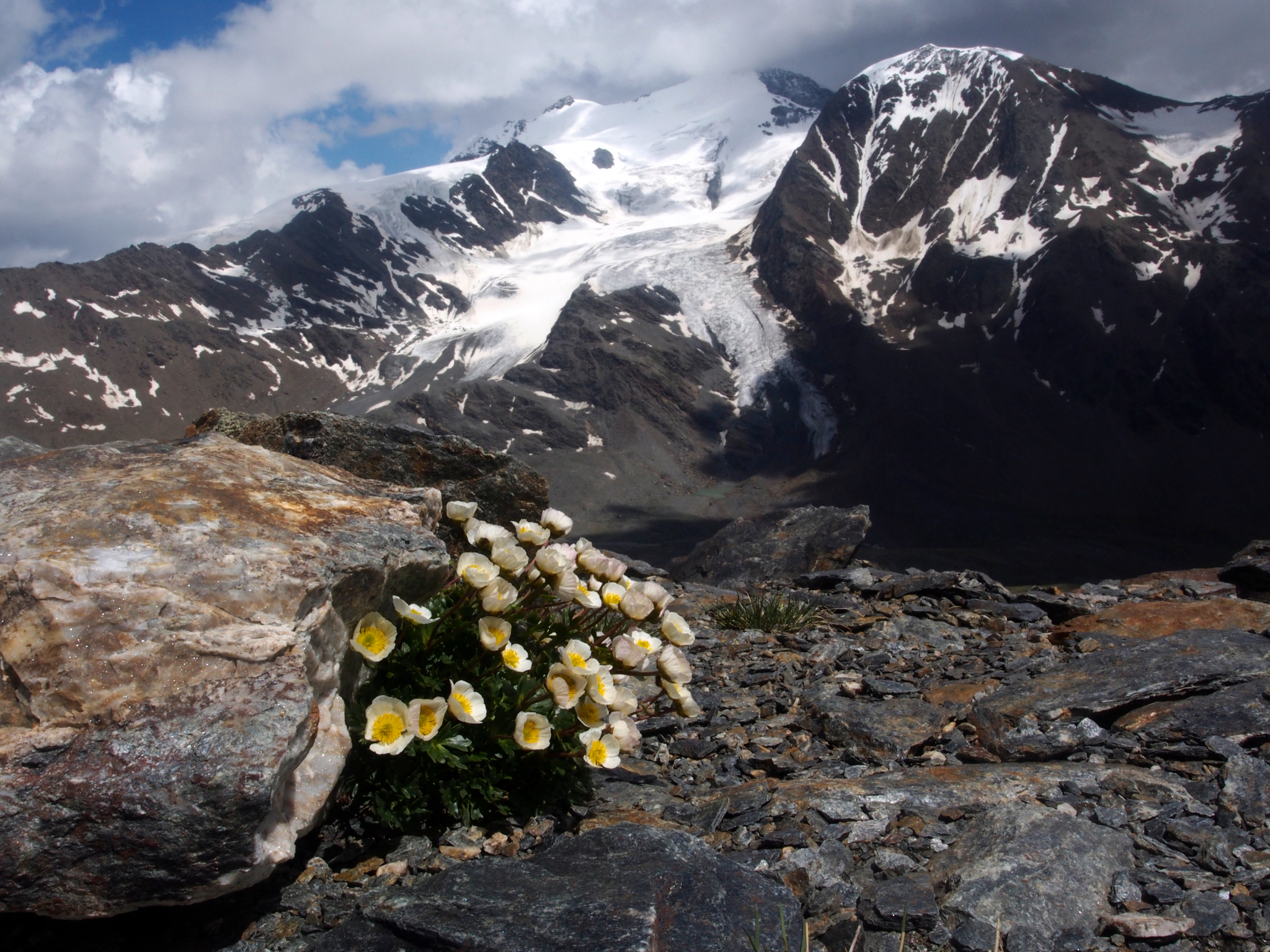
Ranunculus glacialis at the toe of the Pasquale glacier. Credit: Marco Caccianiga

A new study examines the impact of glacial extinction on biodiversity in alpine regions.

Many of the botanicals used in traditional medicines and to flavor spirits, from absinthe to eau de vie, grow in alpine regions near the toes of glacial ice. As the planet warms and glacial ice retreats, this unique environment is changing and altering the diversity of the plant community.

An Italian team of researchers explored the physical and biological factors that cascade through an ecosystem as glaciers retreat. The results, published in the January issue of Frontiers in Ecology and Evolution, are not promising for your favorite flavored liquors.

“Glacial retreat is a double-edged sword,” said Gianalberto Losapio, a postdoctoral research fellow in ecology at Stanford University and first author on the study. “Habitat opens as a direct consequence of losing the glacier, but diversity decreases as competition increases from the species that persist.”

The researchers examined published data sets on plant species distribution and leaf traits along with unpublished, original data on environmental conditions at four locations—Vedretta d’Amola glacier, Western Trobio glacier, Rutor glacier, and the Vedretta di Cedec glacier forelands—within the Italian Alps.

Continue Reading »
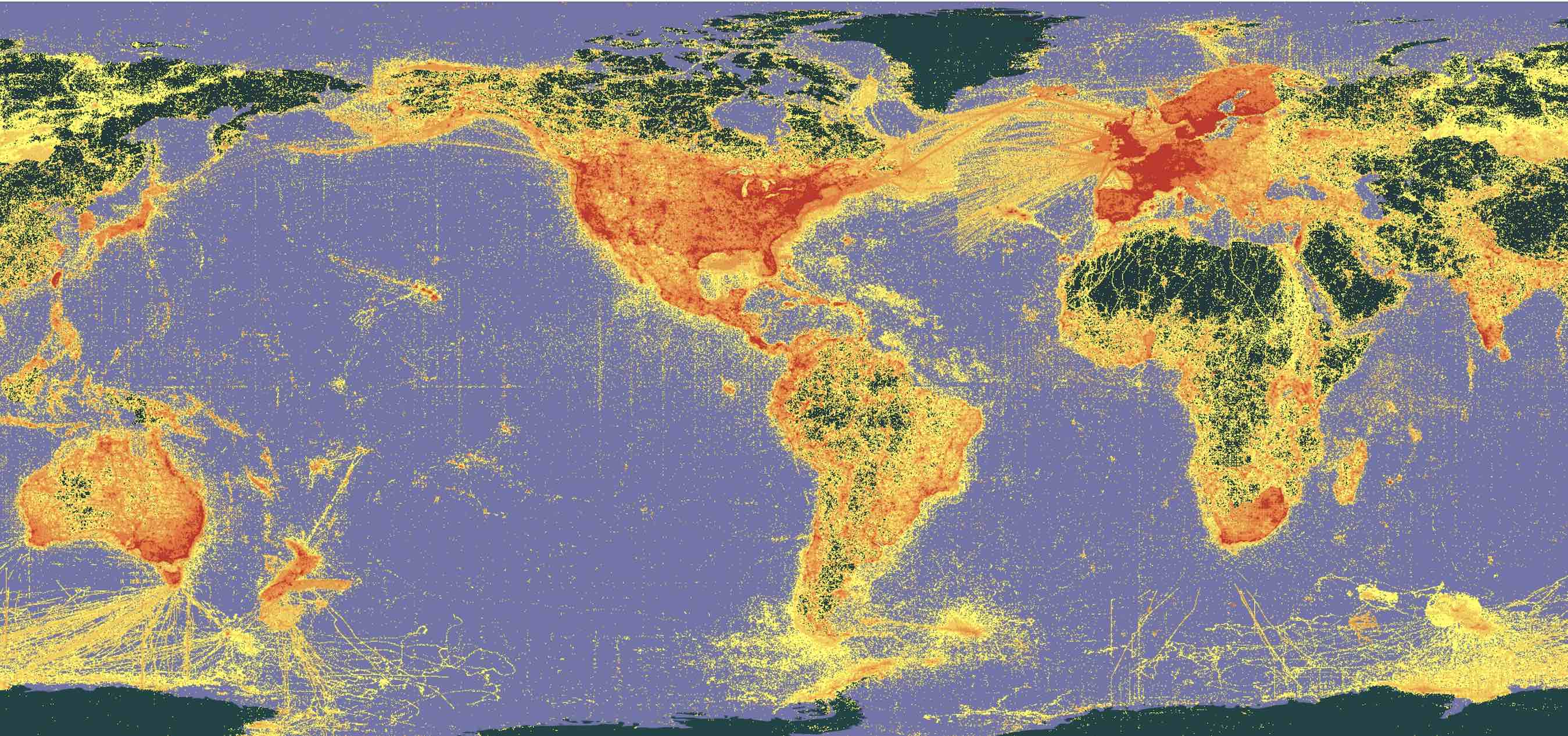
Map illustrating more than 1.5 billion digital records of species occurrences, freely and openly accessible through the Global Biodiversity Information Facility
Credit: OpenStreetMap contributors, OpenMapTiles, GBIF 

As the planet continues to warm and humans encroach on more wilderness areas, scientists warn of the unfolding sixth mass extinction on the planet. To evaluate the progression of this catastrophe, researchers need a large amount of high-quality data that contains detailed records of plant and animal biodiversity across the planet. The Global Biodiversity Information Facility (GBIF) provides the largest open-access biodiversity data network for researchers, conservation agencies, and ultimately, policy makers. It also provides a bridge to organizations, like museums and citizen science groups, that hold valuable biodiversity resources. With all of this information, could GBIF provide researchers the resources they need to slow the threat of the next mass extinction? 

Venturing into the Jungle of Data Science

For centuries, museums have held the storehouse of specimens required to understand biodiversity across the planet. These archives serve as historical snapshots of biodiversity in one area, at one time. This information, until recently, has remained isolated. Recent efforts to digitize collections has produced a bridge between these rich troves, combining collections into a larger pool that researchers can tap to tackle bigger questions about global biodiversity. 

“Datasets from thousands of museums across the globe are increasingly digitized and accessible in publicly searchable, online data portals,” said Mason Heberling, assistant curator of botany, co-chair of collections at Carnegie Museum of Natural History and first author on the study. “We are increasingly swimming in high volumes of data, but accessing and making sense of these data can be the limiting challenge.” 

Continue Reading »