
Feeds:
Posts
Comments
Gleise 1132 b is an exoplanet in the constellation Vela, about 40 light-years away from Earth. Credit: NASA, ESA, and R. Hurt (IPAC/Caltech)

Researchers have long been curious about how atmospheres on rocky exoplanets might evolve. The evolution of our own atmosphere is one model: Earth’s primordial atmosphere was rich in hydrogen and helium, but our planet’s gravitational grip was too weak to prevent these lightest of elements from escaping into space. Researchers want to know whether the atmospheres on Earth-like exoplanets experience a similar evolution.

By analyzing spectroscopic data taken by the Hubble Space TelescopeMark Swain and his team were able to describe one scenario for atmospheric evolution on Gliese 1132 b (GJ 1132 b), a rocky exoplanet similar in size and density to Earth. In a new study published in the Astronomical Journal, Swain and his colleagues suggest that GJ 1132 b has restored its hydrogen-rich atmosphere after having lost it early in the exoplanet’s history.

“Small terrestrial planets, where we might find life outside of our solar system, are profoundly impacted by atmosphere loss,” said Swain, a research scientist at the NASA Jet Propulsion Laboratory (JPL) in Pasadena, Calif. “We have no idea how common atmospheric restoration is, but it is going to be important in the long-term study of potential habitable worlds.”

Continue Reading »
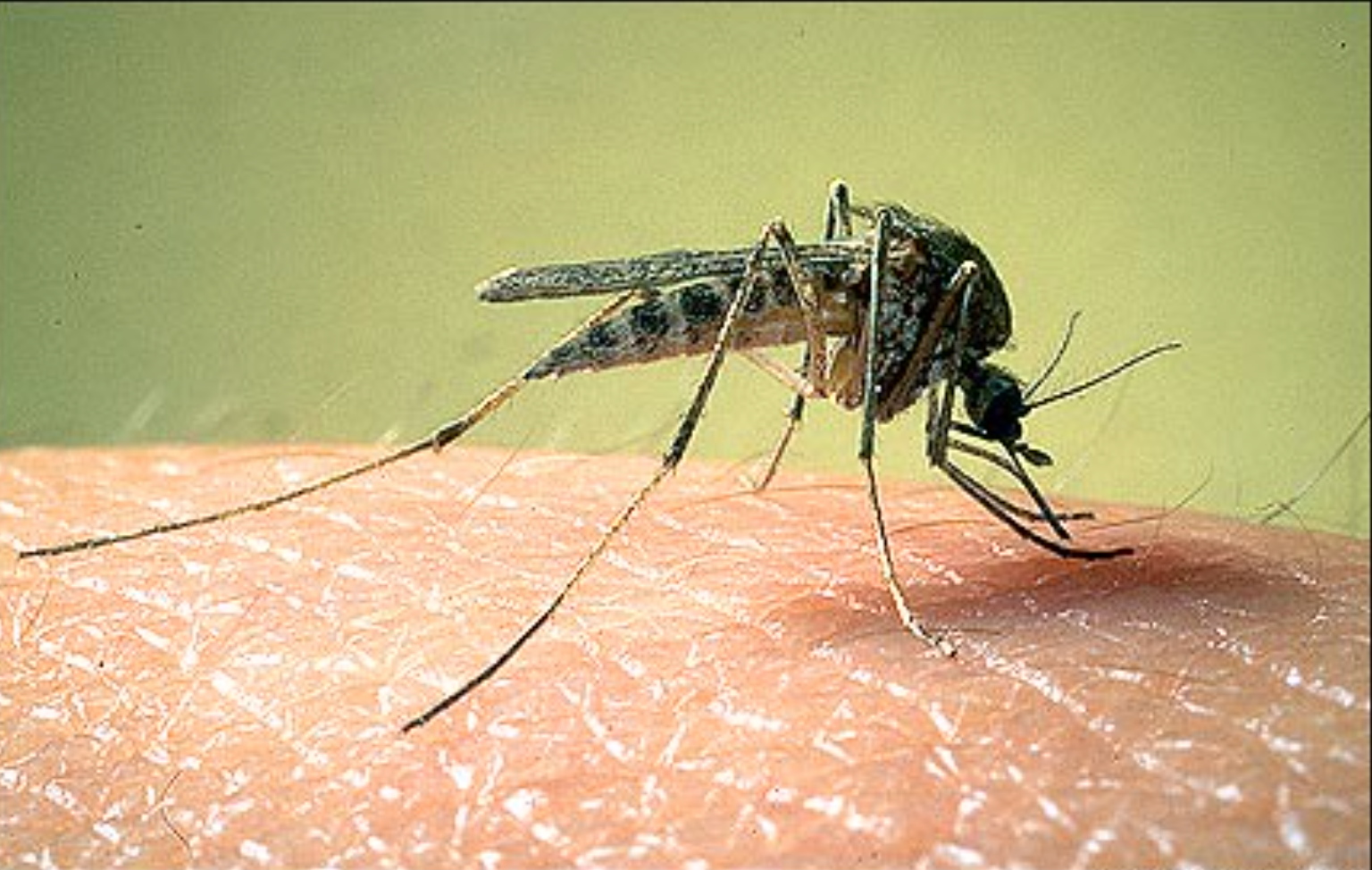

“Mosquito picando” by trebol_a is licensed under CC BY-NC-SA 2.0

Nothing feels more like summer than a neighborhood barbecue, especially following the dreary winter months. But the nemesis of summer gatherings remains: the droning whine of mosquitoes around our ears.

So, why do these bloodsucking insects hover around our ears in the first place? And why do they produce that annoying buzz?

“The buzzing in your ear is mostly just a side effect of the mosquito’s wings beating,” said Michael Riehle, a professor of entomology at the University of Arizona. “[The sound] doesn’t have a long range, so you notice it most when they are flying around your ears.”

Ladies that lunch

That buzzing you hear is likely from a female mosquito.  That’s because male and female mosquitoes lead very different lives. The males typically hang out and sip on the nectar of flowers; they couldn’t care less about the humans lumbering about. The females, however, need to find a blood meal after mating in order to have enough energy to produce eggs. In fact, female mosquitoes are equipped with unique tools to home in on their next victim.

“From a distance, [female mosquitoes] cue in on carbon dioxide that we exhale in conical plumes from our bodies,” Riehle told Live Science. “The carbon dioxide stimulates the female mosquito to start host-seeking, flying back and forth to follow that concentration gradient back to the source.”

In other words, mosquitoes buzz around our heads because that’s where we expel the most carbon dioxide.

Continue Reading »

Researchers in Spain monitored variations in seismic noise across Barcelona as the city locked down during the pandemic, clarifying the seismic band associated with human activity.

Tracking vibrations before and throughout the pandemic has helped scientists pinpoint the seismic noise in Barcelona, Spain, most closely associated with human activity. Credit: Mattia PanciroliCC BY-NC-ND 2.0

In March 2020, countries around the world began to shut down to slow the spread of the coronavirus. Although the measures were preventative and protective, they also offered scientists an opportunity to evaluate how this drastic change rippled throughout the environment. Within a few weeks of the initial lockdown, Spanish scientists recorded a significant reduction in air pollutionJordi Díaz, part of the scientific staff at Geociencias Barcelona–Consejo Superior de Investigaciones Científicas, and his team used this unique period to create a baseline for seismic noise in urban areas.

In September 2019, seismologists established a network of 14 temporary seismic sensors along with 5 permanent sensors (all placed 2 to 3 kilometers apart from one another) across Barcelona to evaluate different methods to capture ambient noise. What they did not anticipate was that the network would monitor the level of seismic vibrations during this remarkable period in human history. The study offers insight into how seismic monitors could be used to monitor human movement to understand economic activity. The results are available in a special issue of the journal Solid Earth.

“When you hear a piece of music, you do not isolate the strings or the percussion; you hear the whole thing,” said Díaz, lead author on the paper. “Like music, a seismic record is composed of vibrations from many different sources—traffic, earthquakes, ocean waves. We were curious if we could identify changes in the seismic data produced by human activity during lockdown.”

Continue Reading »

Well. It’s official. Planet Earth for Kids is now available on Amazon. If you have a wee person in your life who is curious, check it out.