“Molecules come embedded by nature in often complex, functional microstructures that we cannot see. Nutritional scientists aim to redesign some foods to protect nutrients and target them to perform specific functions in a way that may enhance human health,” said José Miguel Aguilera, emeritus professor of chemical and food engineering at the Pontifical Catholic University of Chile in Santiago in an interview with BBC Food (https://www.bbc.co.uk/food/articles/food_matrix).
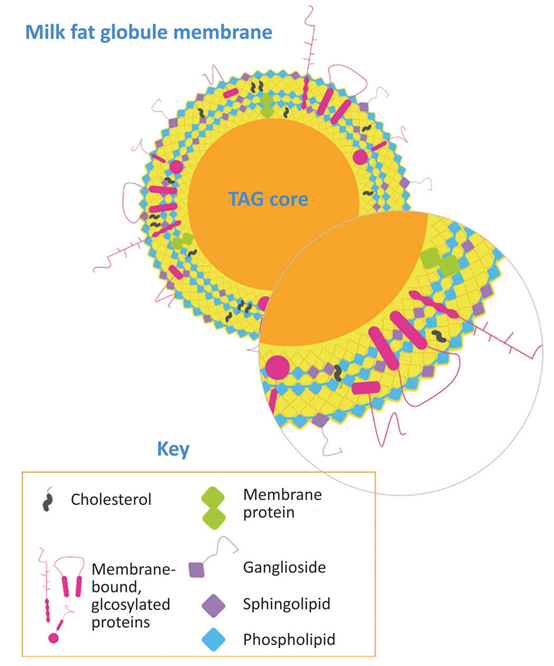
There may be no better example of this matrix effect than the milk fat globule membrane (MFGM), a tri-layer membrane that surrounds droplets of fat in breast milk.
A new study finds the lofted pollutants came from major European cities, but further study is required to fully understand the plastics’ transport and deposition processes.
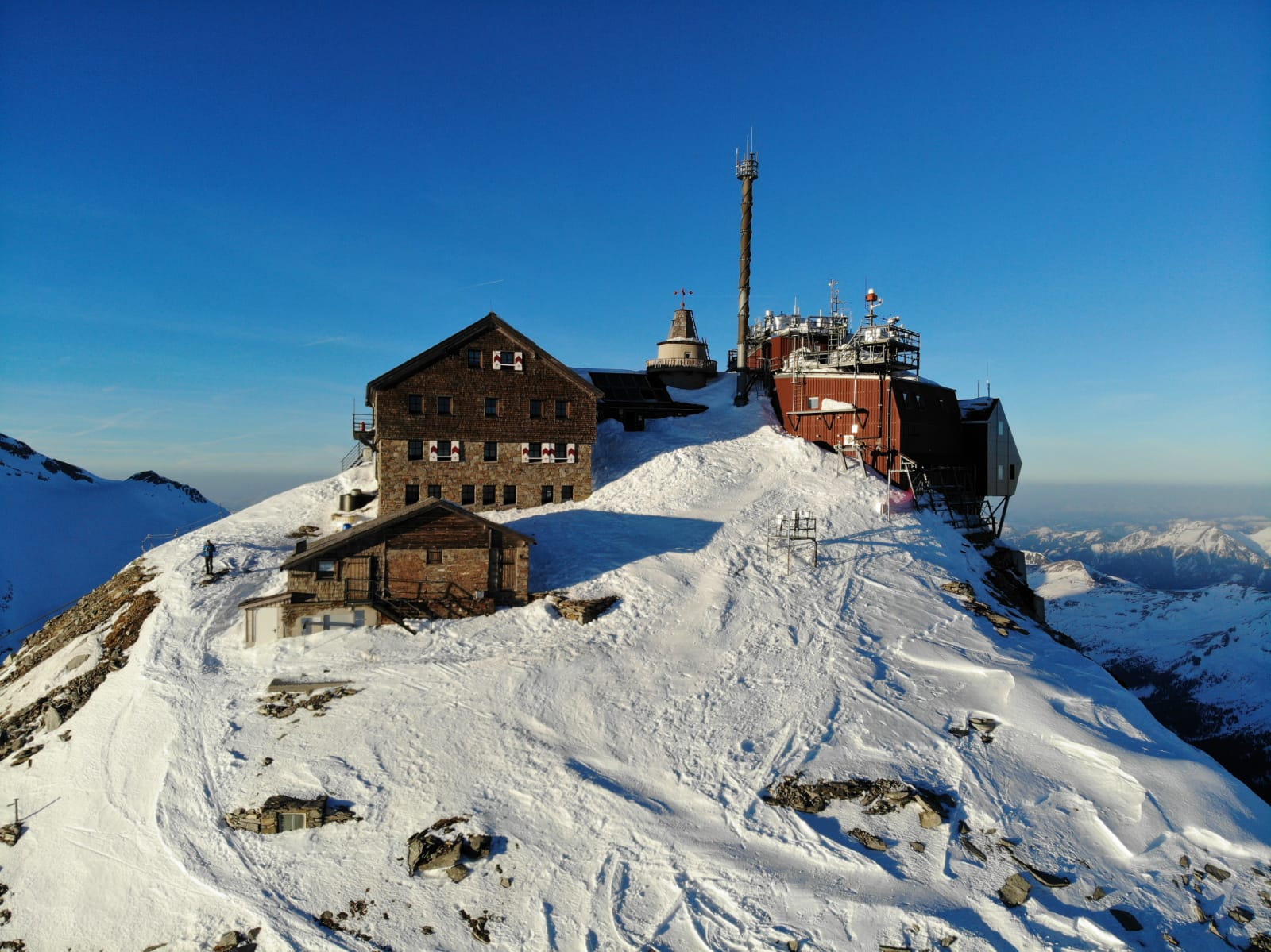
To test for the presence of nanoplastics in the Alps, researchers gathered samples of melted snow at Sonnblick Observatory, 3,106 meters above sea level. Credit: Elke Ludewig
Plastics are ubiquitous, with more than 350 million tons produced worldwide every year. The far-reaching effects of synthetic materials are also in the news, from the pile of garbage circulating in the Pacific to elephants dying from consuming nondegradable plastic waste. Now, a new study from an international team of researchers found tiny plastic particles high in the Alps.
Pervasive Plastics
Since plastics do not have a permanent environmental sink, they continue to degrade, becoming smaller until they are considered nanoplastics, which are 100 times thinner than a human hair. These fragments of plastic are tiny enough to be carried aloft and distributed by the wind. However, data on the distribution and concentration of nanoplastics are rarely reported.
Dušan Materić, a researcher at Utrecht University in the Netherlands, and colleagues were interested to see if nanoplastics were present in high-altitude, remote places, like the Alps. So they gathered 38 samples at Sonnblick Observatory from February to March in 2017. The observatory sits on a remote peak in the Austrian Central Alps, more than 3,100 meters above sea level. They focused on four commonly used plastics: polypropylene (PP), polyethylene terephthalate (PET), polyethylene (PE), and polystyrene (PS). The team used thermal-desorption proton-transfer-reaction mass spectrometry to measure and identify the tiny particles in the samples they collected. After analyses, the results were compared to 40 unique ions identified from new plastic exemplars.
For the last four decades, Earth Island Institute has been at the forefront in the fight for the environment. This experience has prepared us as our planet reaches a crossroad. Through a growing network of grassroots activists and inspired leadership, Earth Island has maintained a single-minded vision to honor and defend the natural world and its inhabitants.
As we celebrate and reflect on 40 years of accomplishments, we invite you to join us in our continuing efforts to address the most urgent environmental issues of our time — to help us demonstrate, in the words of David Brower, our founder, that this generation has love for the next.
Spectral data suggest that Kamo‘oalewa, a near-Earth asteroid, has a composition similar to lunar rocks.
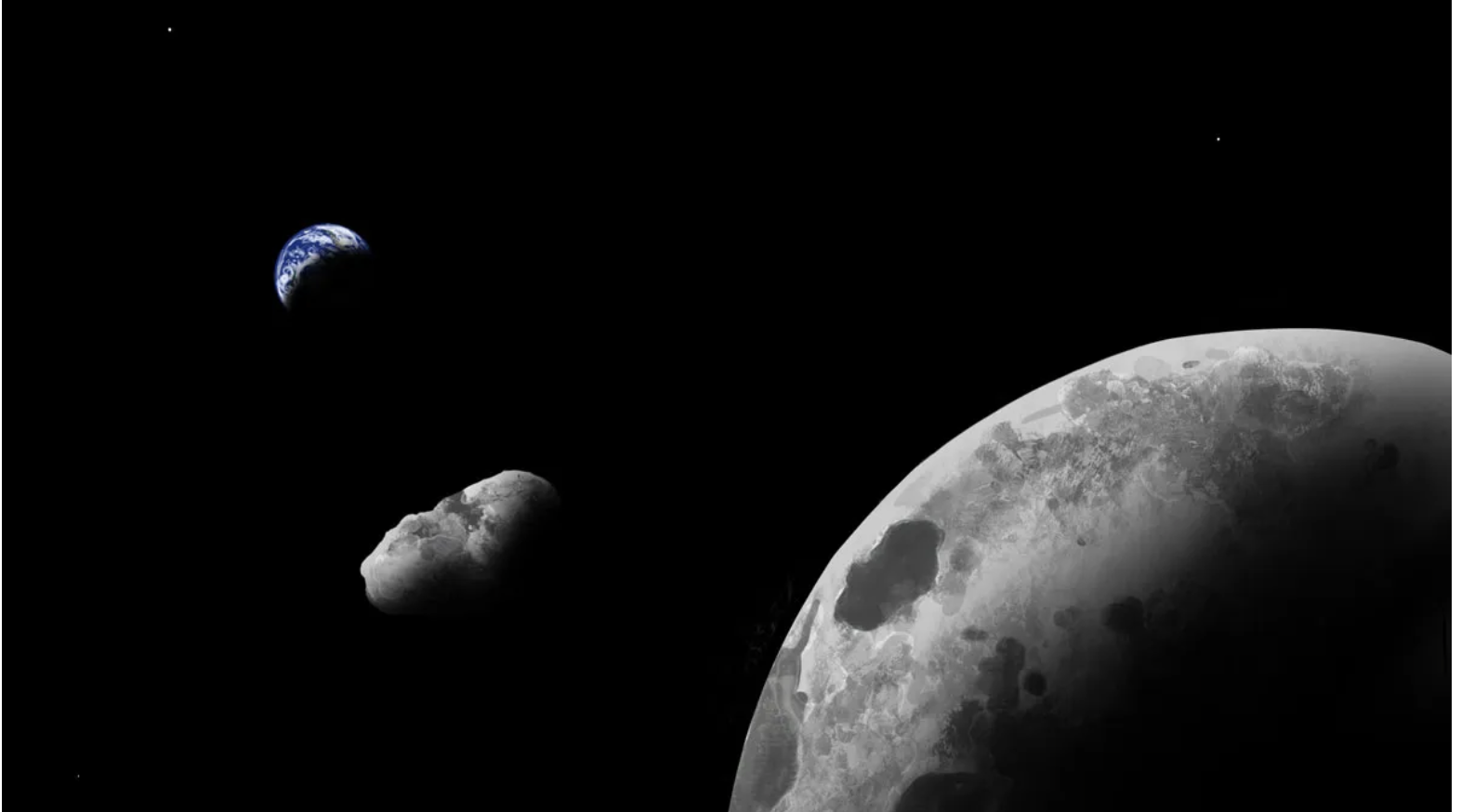
Astronomers have shown that the near-Earth asteroid Kamo‘oalewa might be a lost fragment of the Moon. Credit: Addy Graham/University of Arizona
Near-Earth objects are fragments of rock that orbit the Sun along paths that remain close to Earth. Researchers study these objects to assess their threat level but also to improve our understanding of the solar system. Most of these objects are difficult to measure, but one asteroid, Kamo‘oalewa, maintains a stable orbit and makes a regular pass of Earth every April, opening a window to study this chunk of rock in greater detail.
A team of researchers at the University of Arizona have evaluated spectral data collected over several years and have determined that Kamo‘oalewa may actually be a fragment of the Moon. The results of the study were published last month in Nature Communications Earth and Environment.
“What was supposed to be a quick one-and-done summer project turned out to be way more interesting,” said Benjamin Sharkey, a graduate student in the Lunar and Planetary Laboratory at the University of Arizona and lead author on the paper. “As we keep pushing discoveries to fainter things in different parts of the sky, it is exciting to open new populations [of objects] to characterize,” he said. Such analysis allows scientists “to rewind time to explain how the solar system formed and evolved.”


 EarthSpin