Feeds:
Posts
Comments

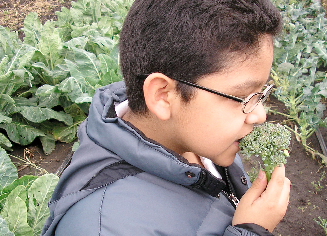
Screen shot 2014-06-09 at 3.51.49 PMImproving the nutritional value of school meals is a growing priority among school systems across the United States. In an effort to provide a solution for school administrators, the USDA’s Cooperative State Research, Education, and Extension Service (CSREES) funded a coalition of school districts and farmers from four states to participate in a new program called “From Farm to School: Improving Small Farm Viability and School Meals.”

Farm to school programs connect schools with local farms to improve the nutrition of school meals, provide agriculture and health education, and support local farmers. The “Farm to School: Improving Small Farm Viability and School Meals” project has been a powerful catalyst to establish farm to school programs as a model to address the diet-related health issues of children while supporting small and medium-scale farmers. The program’s model allows schools to buy and feature farm fresh foods, such as fruits and vegetables, eggs, honey, meat and beans on their school lunch menus.

Continue Reading »

Mad cow disease is a fatal neurodegenerative condition in cattle that is related to the human form of a disease that has caused the deaths of nearly 200 people worldwide. Currently, testing for this disease in cattle is a lengthy process that only occasionally results in a correct diagnosis.

With funding from USDA’s Cooperative State Research, Education, and Extension Service (CSREES) National Research Initiative (NRI), scientists in New York created a new device that may provide a faster, easier, and more reliable way to test for mad cow disease, also known as bovine spongiform encephalopathy (BSE).

Continue Reading »

Screen shot 2014-06-09 at 3.47.19 PMWhat do you get when you cross E. coli with biofuel waste products?  A new process that may revolutionize the economic development of the growing biofuel industry.

Biofuels represent the best sustainable, secure, and renewable alternative to fossil fuels. Unfortunately, biofuel production is beset by the same problem as traditional petroleum refining – excess waste. In traditional refining, only about 60 percent of the crude oil becomes gasoline, the rest is used to make other products. Similarly, as biofuel production increases, the market is being flooded with its waste byproducts, specifically glycerin, also known as glycerol.

Glycerin is cheap and abundant in the current marketplace. Although there are many potential uses for the substance, it is difficult to break it down into products with greater economic value.

Continue Reading »

There is no simple solution to the energy problem. Crops, such as corn, compete with the food supply. Poplars and other trees could provide a sustainable alternative for ethanol production; however, they require costly pretreatment before processing into ethanol. Researchers at North Carolina State University (NCSU) have identified a potential solution to the problem.

Currently, the ethanol industry provides about four billion gallons of ethanol to the fuel market, which is expected to grow. Developing a process that effectively makes ethanol from cellulose derived from different types of plant biomass, particularly wood, remains difficult due to one significant barrier. The barrier is known as lignin.

Continue Reading »