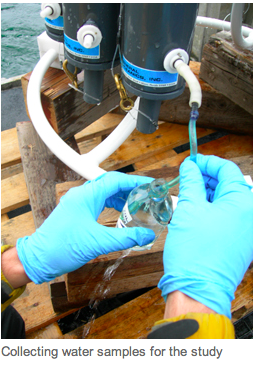
 The ocean is teeming with life. But this life teeters on the delicate balance between the creation and destruction of organic carbon. Like green plants on land, algae and bacteria in the surface waters of the ocean combine nutrients, water, and carbon dioxide in the presence of sunlight to fix organic carbon in the form of biomass. This organic carbon, directly or indirectly, provides food for all life in the ocean and is a key part of the carbon cycle.
In regions of the ocean where water circulation is constrained and nutrient input is high the consumption of organic carbon results in severe oxygen depletion producing an oceanic feature known as an oxygen minimum zone (OMZ). Without oxygen, organisms living in these zones suffocate or migrate away, leaving the region a ‘dead zone.’ Global warming is thought to exacerbate this process, allowing OMZ ‘dead zones’ to grow in volume and intensity with potentially harmful consequences to life in the ocean and the health of the planet – at least as we know it.

 EarthSpin