Feeds:
Posts
Comments

UC Riverside study examines molecular pathways that may instigate seizures in some multiple sclerosis patients
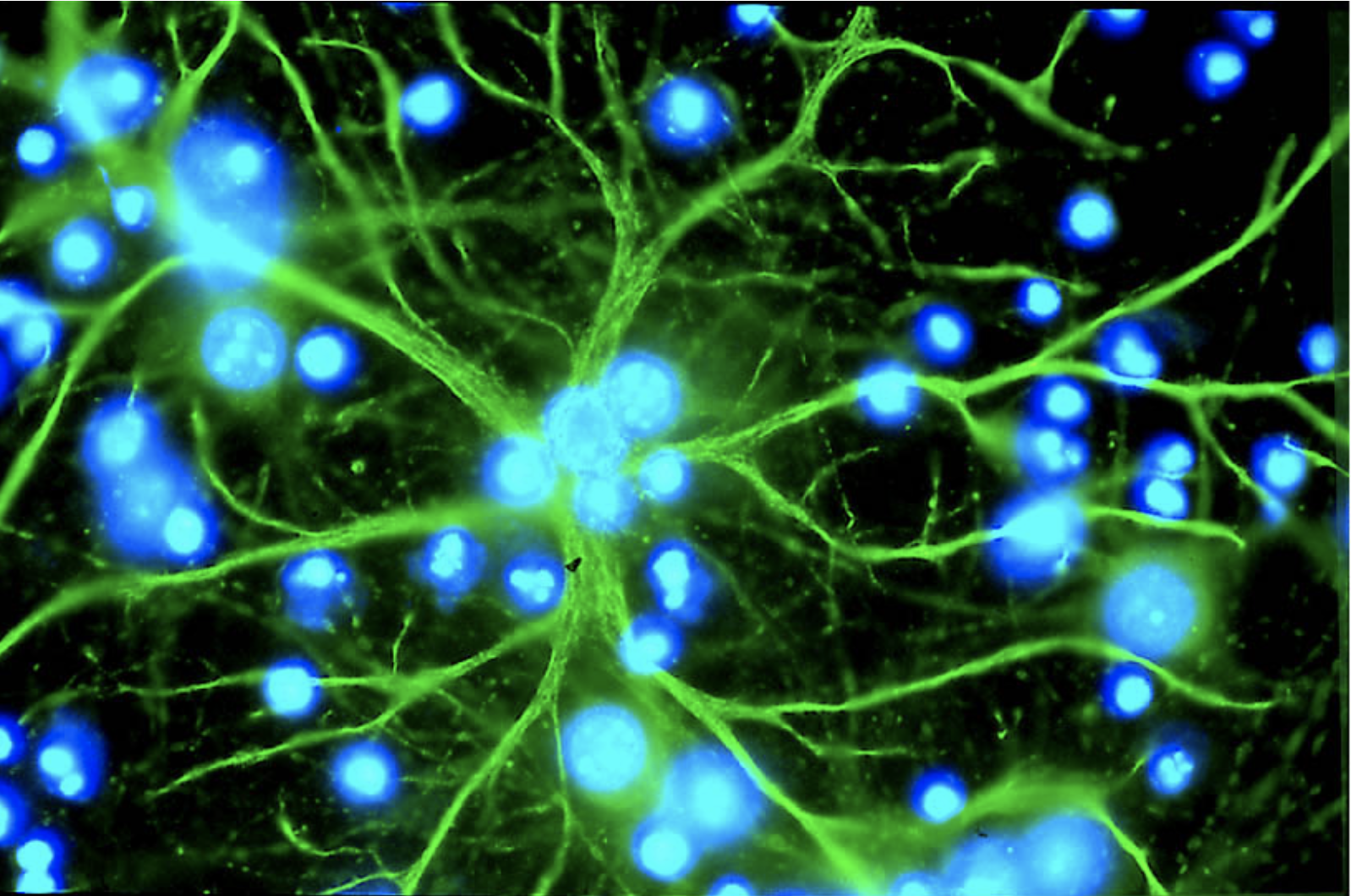
Photo: Karin Pierre, Institut de Physiologie, UNIL, Lausanne.

A research team at the University of California, Riverside School of Medicine has identified a pathway involving astrocytes, a class of central nervous system support cells, that could shed light on why seizures happen in a subset of multiple sclerosis, or MS, patients. 

Study results, available in ASN Neuro, improve scientific understanding of how seizures arise in MS and could provide the foundation for better therapies to manage treatment-resistant seizures in MS and other brain diseases.

Characterized by progressive episodic decline in neurological function, MS affects more than 900,000 people in the United States. This autoimmune disease damages the fatty sheath — myelin — that protects nerve fibers, which hinders the speed of signals in the central nervous system. While not classically considered a defining symptom of the disease, seizures occur three-times more often in MS patients than healthy individuals and may portend a flare-up of symptoms. MS patients that experience seizures also have a decreased quality of life and higher mortality rate. The mechanisms that cause seizures in MS patients remains poorly understood.

“During a seizure, there is a dysfunction between inhibition and excitation and a bunch of neurons fire together without control,” said Seema Tiwari-Woodruff, a professor of biomedical sciences and senior author on the paper. 

Continue Reading »
(Photo by David Bailey, © Woods Hole Oceanographic Institution)

Just as there are many human health risks to contend with in the marine environment, the global ocean is a vast and bountiful treasure chest of resources we rely on every day to support our existence. Protein-rich sustenance, medical treatments, and physical and mental well-being are just some of the ocean-related benefits societies have taken advantage of for centuries.

Recognizing the critical importance of the oceans to our own health—and the planet’s—ocean scientists are working to investigate the untapped potential of the sea in order to maximize these benefits, and to help ensure the ocean’s bounty for generations to come.

Read more: https://www.whoi.edu/oceanus/feature/the-bounty-of-the-ocean/

A new study at Carnegie Mellon University explores why local perceptions often differ on contentious global issues, like climate change.

The internet has brought us closer together, but it has also pushed us farther apart. On issues as far reaching as climate change and vaccinations, disparity is growing between scientific consensus and pockets of local doubt. 

New research at Carnegie Mellon University explores how a local vantage point can muddle how people understand important global issues. Stephen Broomell leverages measurement theory to reveal an incompatibility between local perceptions and actual global events in his study published in the March 25 issue of Cognitive Science. 

“Any large problem that requires consensus can be undermined by random differences between local perspectives,” said Broomell, associate professor in the Department of Social and Decisional Sciences at CMU. “In the presence of random noise, you need global evidence to understand a global issue.” 

Continue Reading »

Your sister is calling, so you pick up. She is crying. She thinks she has the coronavirus (COVID-19). After calming her down, you find out that she called her doctor and they refused to test her. What do you do?

Who Gets Tested

In order to be tested for COVID-19, a you need to fall into one of the following two categories:

  1. History of fever (temp > 100 F) and flu-like symptoms such as:
    • new cough,
    • difficulty breathing,
    • malaise, and
    • muscle aches.
  2. Mild respiratory symptoms without fever should not be tested unless you are in an “at risk” category.

At-risk is defined as:

  1. been in close contact with someone (not in the same household) who has tested positive for COVID-19 within the last 14 days;
  2. traveled to an area with widespread community transmission within the last 14 days;
  3. are immunocompromised;
  4. are over age 65;
  5. live in a shared setting, such as a long-term care facility, homeless shelter, or correctional facility; or
  6. pregnancy.
Continue Reading »