Feeds:
Posts
Comments

Archive for the ‘Plants’ Category

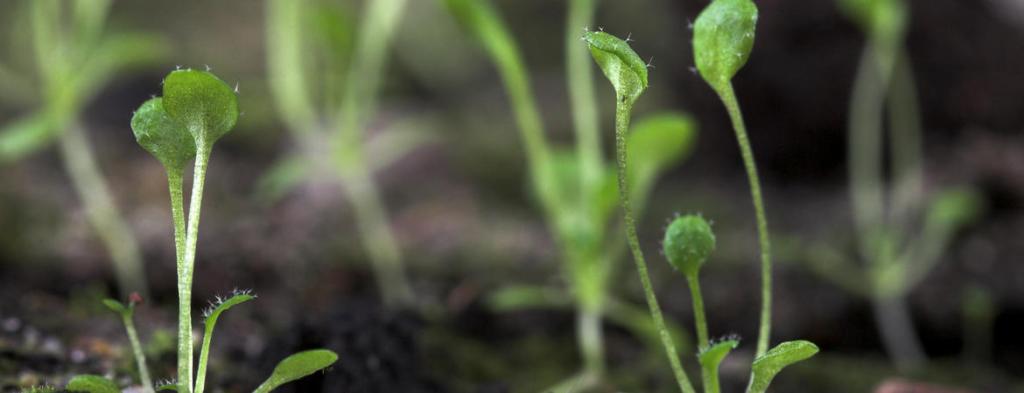
transgenic plant of Arabidopsis. Laboratory test for modification

With a temperature sensor in hand, researchers can engineer crops that produce yields in warmer climates.

When it gets hot outside, humans and animals have the luxury of seeking shelter in the shade or cool, air-conditioned buildings. But plants are stuck.

While not immune to changing climate, plants respond to the rising mercury in different ways. Temperature affects the distribution of plants around the planet. It also affects the flowering time, crop yield, and even resistance to disease. 

(more…)
Read Full Post »

Lots of folks fancy a cup of tea when they need a pick-me-up – orange pekoe, Darjeeling, etc.  Not surprisingly, a spot of tea can help plants feel better, too.  But not just any tea; if you want to share a pot with your plants, you’ll need to brew up some earthworm tea.

This beverage, which has become all the rage in organic agriculture, is not made from earthworms. No, this tea is made from earthworm excrement steeped in liquid. Earthworm tea is easier to transport and apply to crops than other types of fertilizers, and plants love it.

(more…)

Read Full Post »

Cyst nematodes are menacing, microscopic roundworms that infect and feed on the root cells of many important agricultural crops. One species of cyst nematode, Heterodera glycines, feeds on soybean crops, resulting in up to $1 billion in crop loss in the United States each year. Recent research, funded by USDA’s Cooperative State Research, Education, and Extension Service (CSREES), is uncovering the mechanisms used by this nematode to weaken the plant’s defense system.

Recent work by scientists at the University of Missouri (UM) and Iowa State University (ISU) is featured on the cover of the March issue of the journal Molecular Plant-Microbe Interactions. The results from their studies may lead to more effective management tools to combat the agricultural pest and protect this vital U.S. crop.

(more…)

Read Full Post »

Screen shot 2014-06-09 at 4.00.38 PMWhile consumers are lately hearing a lot about corn-based ethanol, a group of scientists advocates using mustard as a lotion, paint, biodiesel additive and lubricant.

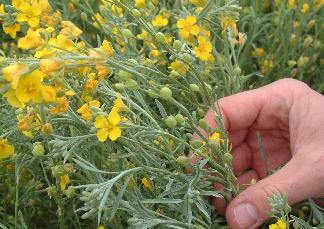
With funding from USDA’s Cooperative State Research, Education, and Extension Service (CSREES), a research group in Texas, Arizona and Illinois is looking at Lesquerella, a member of the mustard family, as a potential source for energy.

(more…)

Read Full Post »

« Newer Posts - Older Posts »