Feeds:
Posts
Comments

Archive for the ‘Physics’ Category

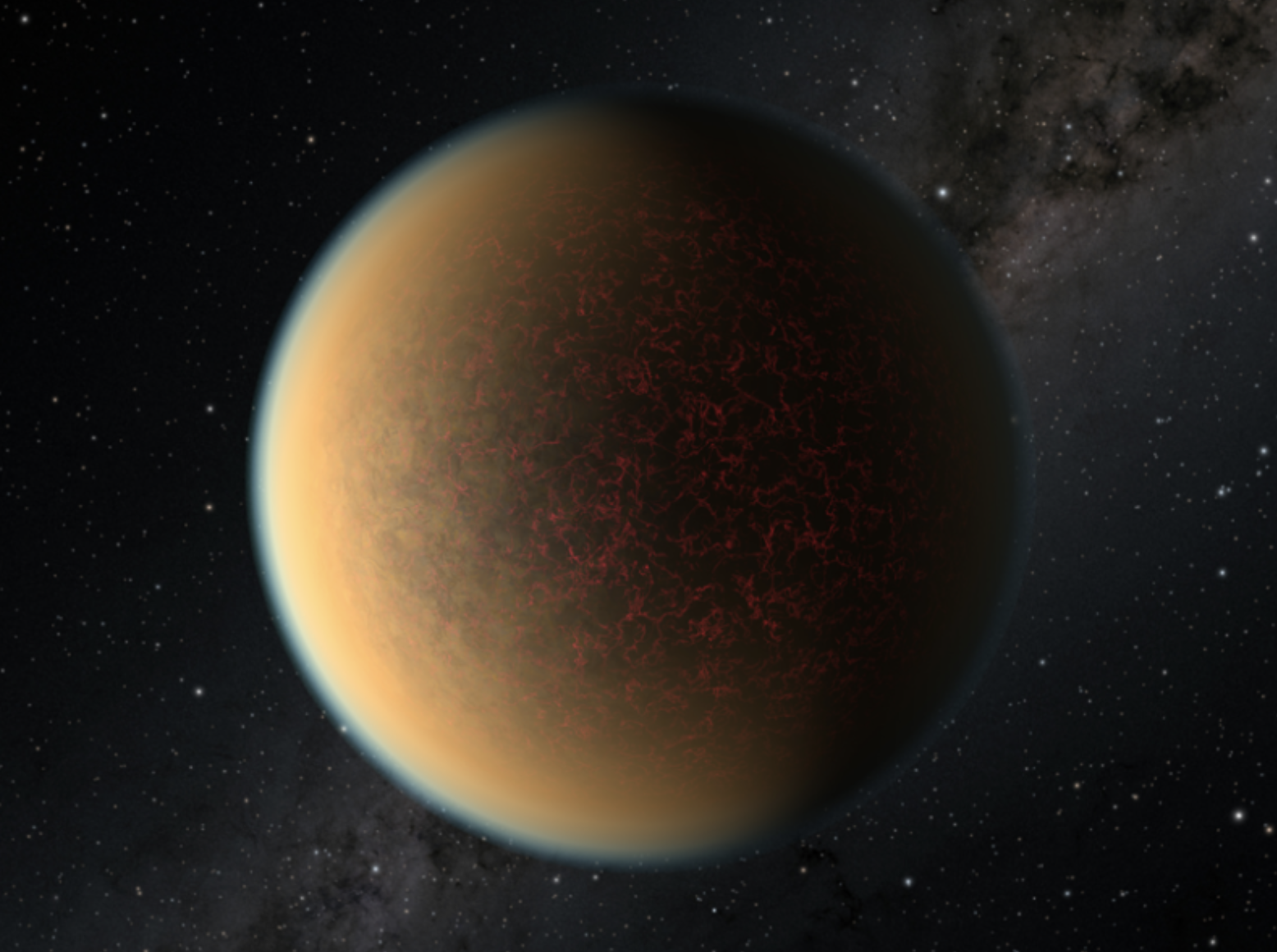
Gleise 1132 b is an exoplanet in the constellation Vela, about 40 light-years away from Earth. Credit: NASA, ESA, and R. Hurt (IPAC/Caltech)

Researchers have long been curious about how atmospheres on rocky exoplanets might evolve. The evolution of our own atmosphere is one model: Earth’s primordial atmosphere was rich in hydrogen and helium, but our planet’s gravitational grip was too weak to prevent these lightest of elements from escaping into space. Researchers want to know whether the atmospheres on Earth-like exoplanets experience a similar evolution.

By analyzing spectroscopic data taken by the Hubble Space TelescopeMark Swain and his team were able to describe one scenario for atmospheric evolution on Gliese 1132 b (GJ 1132 b), a rocky exoplanet similar in size and density to Earth. In a new study published in the Astronomical Journal, Swain and his colleagues suggest that GJ 1132 b has restored its hydrogen-rich atmosphere after having lost it early in the exoplanet’s history.

“Small terrestrial planets, where we might find life outside of our solar system, are profoundly impacted by atmosphere loss,” said Swain, a research scientist at the NASA Jet Propulsion Laboratory (JPL) in Pasadena, Calif. “We have no idea how common atmospheric restoration is, but it is going to be important in the long-term study of potential habitable worlds.”

(more…)
Read Full Post »

Cloaking devices often play a pivotal role in many Star Trek episodes. This technology masks the lurking Klingon Bird of Prey, allowing it to sneak up on Star Fleet’s unwitting and vulnerable crew. Scientists are now working to take this technology from the dramatic realm of science fiction and make it science fact. Amanda D. Hanford, Ph.D., at Pennsylvania State Universityis taking the introductory steps to make acoustic ground cloaks a future concealment option.

See related articles on Gizmodo and BBC.

(more…)

Read Full Post »

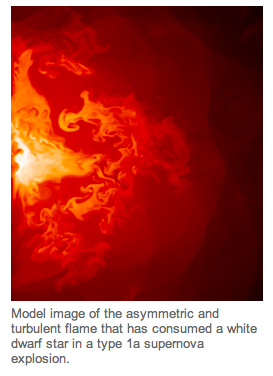
Screen shot 2014-06-09 at 4.30.41 PMThe magnificent light display in the evening sky has inspired artists, explorers, and dreamers for generations. Scientists are also intrigued by stars, but they use these celestial bodies to illuminate their understanding of the origin of the universe.

“Today, thanks to an array of powerful tools and clever experiments, the stars are telling us more than ever about the evolution of the universe and the creation of the elements needed for life,” said lead author Daniel Kasen of the University of California, Santa Cruz.

(more…)

Read Full Post »

« Newer Posts