Feeds:
Posts
Comments

Archive for the ‘Physics’ Category

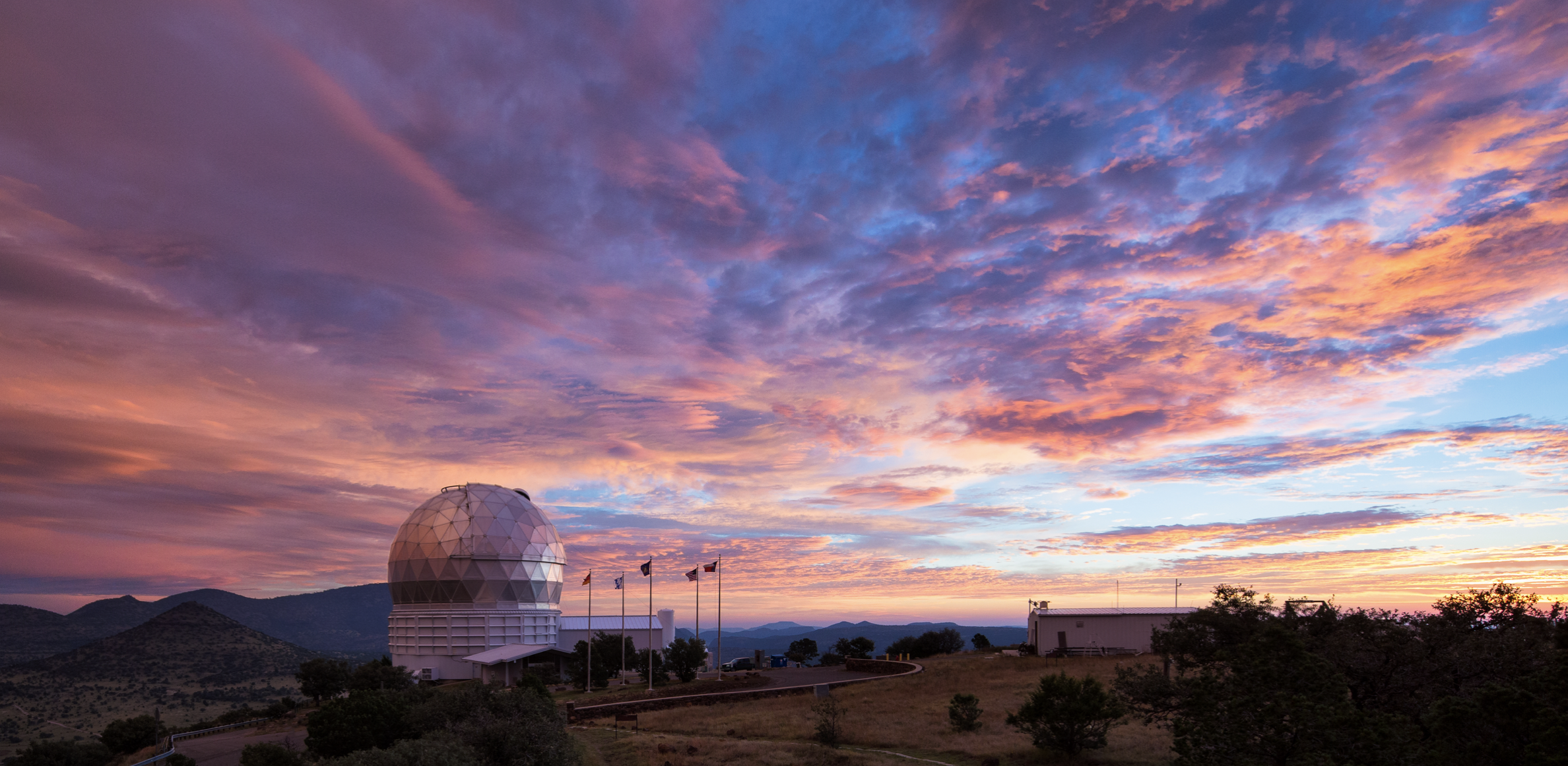
The Hobby-Eberly telescope (HET) at The University of Texas at Austin’s McDonald Observatory has reached a milestone — 25 years of service. One of the world’s largest optical telescopes, the HET captures light from stars and distant galaxies to help astronomers solve the mysteries of the cosmos.

“This year marks an important milestone for the Hobby-Eberly telescope,” said Taft Armandroff, the Director of McDonald Observatory and HET Board Chair. “The HET provides the resources that our faculty, students, and researchers from partner institutions use to do cutting-edge science.”

First dedicated in 1997, the HET rotates on a cushion of air to train its 11-meter (433-inch) honeycombed mirror 55 degrees above the horizon to scan the universe. The telescope received an upgrade in 2016, expanding its field-of-view to capture a section of the night sky 120 times larger than before. With the upgrade, the HET has been instrumental in some remarkable discoveries.

(more…)
Read Full Post »

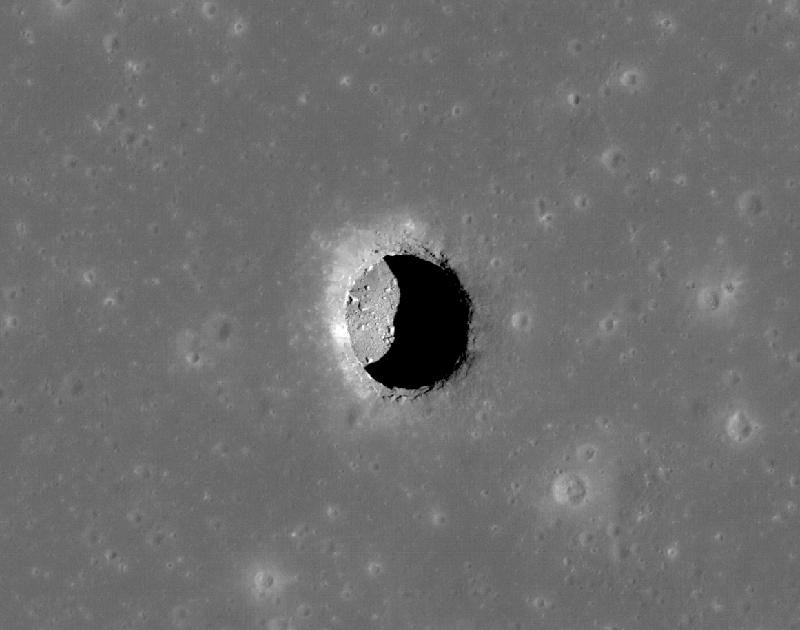
Researchers studied temperature anomalies in this pit crater in Mare Tranquillitatis. Credit: Credits: NASA/Goddard/Arizona State University 

Large caves near the Moon’s equator maintain a stable daily temperature around 17ºC.

Settlements on the Moon have a certain poetic appeal, but scientists have long understood the complications required to achieve this goal. Lack of oxygen, cosmic radiation, and temperature extremes are only a few of the imposing obstacles to this endeavor.

A new study reveals that one hurdle may not be as difficult to overcome as it first appeared. Researchers first identified caves on the Moon in 2009, but the question remained if these features could regulate temperature in the same way caves do on Earth. After more than a decade scanning for temperature anomalies on the lunar surface, a team of researchers at the University of California, Los Angeles and University of Colorado have determined that lunar caves maintain a comfortable 17ºC (63ºF). The results were published in Geophysical Research Letters.

(more…)

Read Full Post »

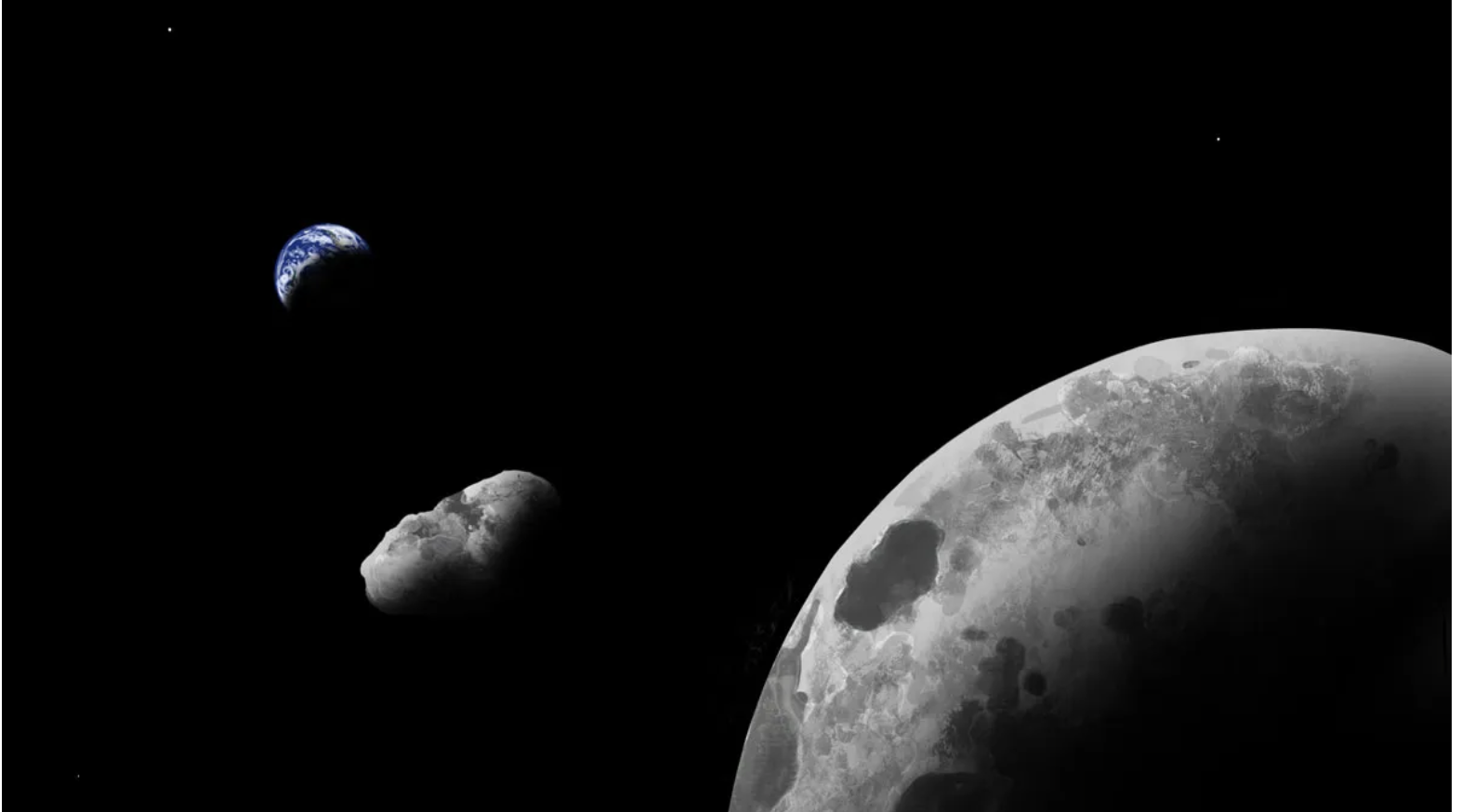
Spectral data suggest that Kamo‘oalewa, a near-Earth asteroid, has a composition similar to lunar rocks.

Astronomers have shown that the near-Earth asteroid Kamo‘oalewa might be a lost fragment of the Moon.
Credit: Addy Graham/University of Arizona

Near-Earth objects are fragments of rock that orbit the Sun along paths that remain close to Earth. Researchers study these objects to assess their threat level but also to improve our understanding of the solar system. Most of these objects are difficult to measure, but one asteroid, Kamo‘oalewa, maintains a stable orbit and makes a regular pass of Earth every April, opening a window to study this chunk of rock in greater detail.

A team of researchers at the University of Arizona have evaluated spectral data collected over several years and have determined that Kamo‘oalewa may actually be a fragment of the Moon. The results of the study were published last month in Nature Communications Earth and Environment.

“What was supposed to be a quick one-and-done summer project turned out to be way more interesting,” said Benjamin Sharkey, a graduate student in the Lunar and Planetary Laboratory at the University of Arizona and lead author on the paper. “As we keep pushing discoveries to fainter things in different parts of the sky, it is exciting to open new populations [of objects] to characterize,” he said. Such analysis allows scientists “to rewind time to explain how the solar system formed and evolved.”

(more…)

Read Full Post »

A team of researchers at the University of Michigan is looking to animals to find new ways for autonomous vehicles to navigate through the environment.

Autonomous vehicles are jauntily steering through the streets of more and more cities, but the navigation systems in these vehicles remain an evolving technological concept. As companies vie for the rights to urban terrains, they typically use sensors based on optical properties (like light waves and video) or radio waves to map and navigate the environment. These options may not provide the best coverage, especially in bad weather. A team of researchers at the University of Michigan is turning to nature to develop something better.

“Animals have the amazing ability to find their way using sound,” said Bogdan Popa, an assistant professor of mechanical engineering at the university and principal investigator on the project. “We want to develop a sensor that uses sound like animals.”

(more…)

Read Full Post »

Older Posts »