Feeds:
Posts
Comments

Archive for the ‘Nutrition and Health’ Category

While not as menacing as the sci-fi B-movie cult classic Attack of the Killer Tomatoes, agricultural scientists have discovered a dark side to, gulp, the earthworm.

Worms may delight gardeners with their ability to aerate the soil, but these organisms are not native to the northern regions of the United States and may be responsible for altering an ecosystem that developed in a worm-free environment.

With funding from USDA’s Cooperative State Research, Education, and Extension Service (CSREES), scientists in Ohio are exploring a sinister link between earthworms and common allergens.
(more…)

Read Full Post »

Clostridium perfringens, the second most common bacterial pathogen responsible for food poisoning in the United States, has been using a “secret weapon” to survive and sicken as many as 250,000 people every year at a cost of several hundred million dollars in medical care and lost productivity.

Now, however, scientists have uncovered the secret behind the C. perfringens’ success.

(more…)

Read Full Post »

Nothing says summer like a ripe, juicy slice of watermelon on a hot day. However, this important summertime fare is under assault and may not even make it to the table; a tiny pathogen is ravaging crops, causing the rind to weaken and allowing the fruit to ooze out into the field.

The disease, called watermelon fruit blotch, accounts for losses of up to 90 percent of marketable yield in some watermelon fields. Fruit blotch was first detected in Florida in 1989. Since that time, it has migrated along the eastern seaboard and into Indiana, affecting 11 states. The rapid migration and expansion of this disease may lie in its seeds.

(more…)

Read Full Post »

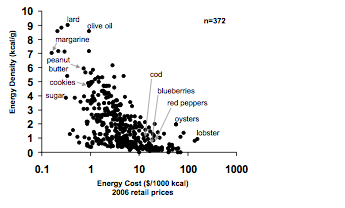
Screen shot 2014-06-09 at 4.07.12 PMRecent studies show that the cost of high-calorie foods are less likely to be affected by inflation and, on average, cost less than low-calorie foods. With obesity plaguing the United States, this trend may hinder low-income families from adopting a low-calorie diet. Funding from USDA’s Cooperative State Research, Education, and Extension Service (CSREES) enabled researchers at the University of Washington to examine the price trends of different food choices.

(more…)

Read Full Post »

« Newer Posts - Older Posts »