Researchers explore drug-seeking behavior with a zebrafish animal model.
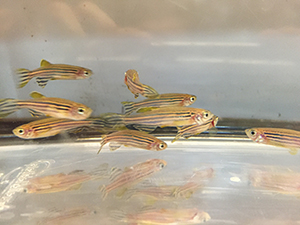 As the opioid crisis escalates, the science behind addiction remains poorly understood. To address this need, researchers at University of Utah Health devised a system that allowed zebrafish, a small tropical fish, to self-administer doses of hydrocodone, an opioid commonly prescribed to people for pain. After one-week, the fish had increased their drug-seeking behavior, even when doing so required them to put themselves in risky conditions. Further, 48-hours after the last exposure, conditioned fish showed signs of anxiety, a hallmark of withdrawal.
Published August 25 online in the journal Behavioral Brain Research, this study offers a new approach to explore the biological pathways behind addiction and withdrawal that could lead to new therapies to treat dependence.
 Sitting in a comfortable, plush green chair, Janice Hanson is a poised woman with an elegant, short haircut. Her calm, dignified demeanor belies the turbulent decades of raising two children with a rare genetic disorder. Little could she imagine that this journey, which began with the birth of her first child 57 years earlier, would culminate with the discovery of a rare genetic mutation responsible for the constellation of symptoms that restricted, but never stopped her children from seeking the most out of life.
  EarthSpin