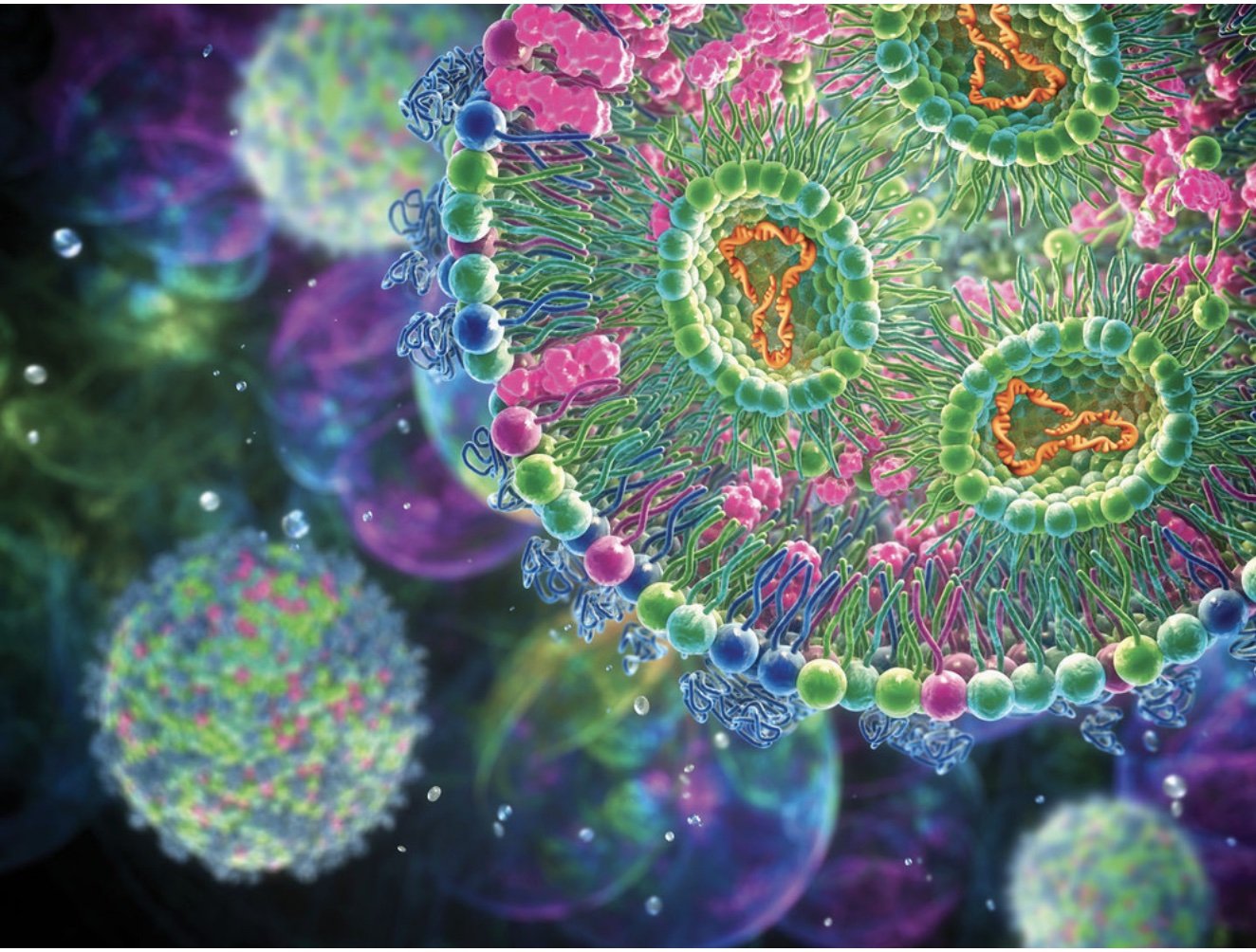
The Moderna and Pfizer COVID-19 vaccines were developed to prevent disease caused by the SARS-CoV-2 virus. These vaccines rely on mRNA, a snippet of genetic code that only contain instructions for how to make a spike protein—the antennae-like protrusions that extend from the surface of the virus’s cell membrane. The spike protein plays an integral role in how the virus gains entry into the host cell. By recognizing the initial attack, a vaccinated person can mount a defense to the virus, triggering an immune response that produces a cascade of antibodies. As a result, a vaccinated person experiences a less severe form of disease and shorter duration of the illness
There is one problem. How do you get the snippet of genetic code, which is unstable on its own, into the host cell to impart protection?
The answer is a sleek lipid capsule, called a lipid nanoparticle. Like a movie star rolling up to a night spot unseen in a blacked-out Bentley, the lipid nanoparticle merges with the host cell’s phospholipid membrane to deliver the mRNA payload, conferring protection against SARS-CoV-2 or its variants. This concept is not new, but the technique has been refined and offers a path forward for the future of therapeutics.
(more…)
 EarthSpin