Feeds:
Posts
Comments

Archive for the ‘Food’ Category

Hyun Park Kang, co-author of a recent article in the Journal of Plant Registrations, punching leaf samples for DNA marker genotyping. Photo by Bao-Lam Huynh.

Commercial markets are embracing traditionally ethnic vegetable crops, adding diversity to the food system. Long beans (Vigna unguiculata subsp. sesquipedalis), which originated in Africa and have been refined through domestication in Southeast Asia, have an export value of $80 million. The edible pods are a symbol of luck and longevity, but more importantly, they pack a nutritious punch, offering a new food option, enriched in protein, vitamins, and minerals.

Despite these benefits, long beans have not broken into larger commercial markets because the current varieties require frequent applications of synthetic chemicals to manage aphids and root‐knot nematodes, limiting marketability and opening the potential of pest resistance. Concerns with pesticide applications have affected consumer demand, and the acreage of long bean has been in decline.

A recent article in the Journal of Plant Registrations (https://doi.org/10.1002/plr2.20361) details the development by researchers at the University of California–Riverside of new long bean germplasm lines that resist aphids and nematodes.

“We are confident that once consumers become familiar with the new resistant varieties, the crop will gain momentum,” says Bao‐Lam Huynh, assistant professor in the Department of Nematology at the University of California–Riverside and first author on the paper.

(more…)
Read Full Post »

Imagine if your neighborhood is routinely destroyed. The houses, streets, and businesses damaged. It would be difficult to have a community thrive under such devastating circumstances. Soil microbes experience a similar scenario when traditional agricultural practices are used on the farm.

The soil microbiome is a collection of bacteria, fungi, and archaea that play an integral role in soil and plant health. These microbes provide vital ecosystem services like breaking down organic matter and cycling nturients to make them available to plants. The microbes also control and suppress pathogens, both fungi and bacteria. 

“[These organisms] promote decomposition of materials, like roots and other plant materials, into carbon dioxide and soil organic matter,” said Christoph C. Tebbe, professor at the Thünen Institute, Germany. “[They] are an important for creating the building blocks for keeping soil in a very healthy structure, not compacted but nice aggregates and a pore system that allows plants to grow better.”

In addition, the soil microbiome consumes and stores excess nutrients from fertilizer applications and purifies water, preventing nutrient run-off and eutrophication further downstream. It also degrades pesticides into nontoxic compounds so the chemicals are more easily processed through the environment. 

“Industrial agriculture requires large fertilizer applications on large fields to grow monoculture crops, which can be productive for years, even decades, but soil structure gets worse and plant inputs may need to be increased,” said Tebbe. “In the end though, farmers want to give their fields and farms to the next generation in a state as good as they received it.”

(more…)

Read Full Post »

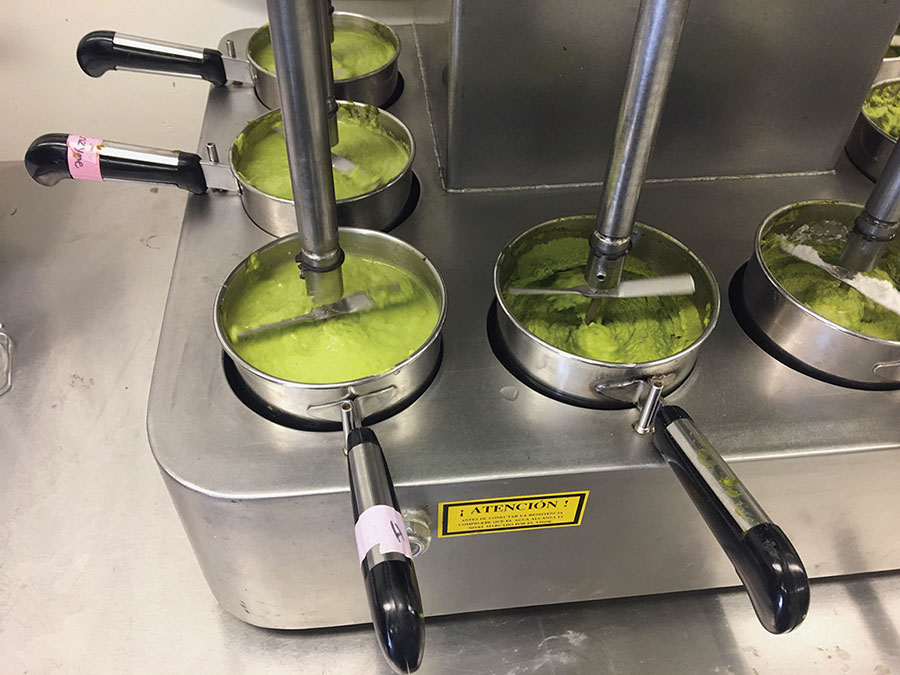
FIG. 1. Paste made from avocado flesh in a lab-scale malaxer where the oil droplets start to coalescence before oil extraction. Credit: John Almazan

Avocadoes are having a moment. The nutritional benefits promote heart health and reduce inflammation, blood pressure, and cholesterol. Not to mention the popularity of avocado toast.

Despite the rise in consumer interest, there are no standards to define the chemical and physical characteristics of avocado oil. Without an internationally defined standard, consumers are left vulnerable to adulterated or fraudulent avocado oil in the marketplace.

“Currently selling and buying avocado oil is like playing a boardgame with no rules,” said Selina Wang, department vice-chair and associate professor of Cooperative Extension in the Department of Food Science and Technology at the University of California, Davis. “With no enforceable standards in place, cheaters win and honest players get taken advantage of.”

(more…)

Read Full Post »

When lipids begin to oxidize, the fatty acids are converted into ammonia and organic acids, like hydroperoxides, epoxides, aldehydes, ketones, and oxidized sterols. These compounds are responsible for the unpleasant sensory changes, like a rancid smell and off taste. The rancidification process also shortens the shelf life of food, leading to food waste and economic losses.

IN THE BEGINNING, THERE WAS SALT AND SMOKE

More than 5000 years ago, humans developed different techniques to extend the use of meat and fish. Some of the earliest preservation methods involved smoking and curing to draw out moisture and prevent microbes from taking hold. Through an iterative approach, epicureans have adjusted the time, humidity, temperature, and spices to impart a unique flavor and texture for each creation. Cured foods gained greater popularity about 2000 years ago as the practice transitioned from a means of survival to gourmet delights, including the still popular charcuterie board.


With the dawn of an industrialized food system, the food industry embraced chemical compounds, like sodium benzoate, butylated hydroxyanisole (BHA), butylated hydroxytoluene (BHT), propyl gallate (PG) and tertbutylhydroxyquinone (TBHQ), to slow lipid oxidation and prevent the growth of bacteria that can cause illness. While synthetic preservatives are safe at low concentrations and have been used in the food system for decades, consumer voices are growing louder in their demand for natural preservatives.

(more…)

Read Full Post »

Older Posts »