Researchers studied temperature anomalies in this pit crater in Mare Tranquillitatis. Credit: Credits: NASA/Goddard/Arizona State University
Large caves near the Moon’s equator maintain a stable daily temperature around 17ºC.
Settlements on the Moon have a certain poetic appeal, but scientists have long understood the complications required to achieve this goal. Lack of oxygen, cosmic radiation, and temperature extremes are only a few of the imposing obstacles to this endeavor.
A new study reveals that one hurdle may not be as difficult to overcome as it first appeared. Researchers first identified caves on the Moon in 2009, but the question remained if these features could regulate temperature in the same way caves do on Earth. After more than a decade scanning for temperature anomalies on the lunar surface, a team of researchers at the University of California, Los Angeles and University of Colorado have determined that lunar caves maintain a comfortable 17ºC (63ºF). The results were published in Geophysical Research Letters.
Monoculture dominates modern agriculture, but many agronomists are looking to the past to explore the environmental and economic benefits of perennial crops with the aim of creating more sustainable farming systems.
For thousands of years, farmers have reaped the benefits of perennial crops, from fruit trees to alfalfa to grapes. Today, farmers and researchers are looking for other perennial crops that require less water and nutrient input than annuals and provide a reliable and economically sustainable food source for their farming enterprises. Perennials do not require reseeding every year, which is an enticing prospect in the face of changing climate, rising energy costs, and land degradation. These plants also allow farmers to disengage from the economic instability of annual planting that require costly inputs and operational expenses.
Recent studies have begun to explore the potential of perennial grains to support new agricultural systems that can meet global caloric requirements on the current footprint of cultivated agricultural land.
The Pros and Cons of Perennial Crops
Most grain crops require annual replanting. To give the new growth a leg up in the competitive world, pesticides and fertilizers kickstart the new growth. This annual production process emits significant greenhouse gases, contributing to climate change that can in turn have adverse effects on agricultural productivity.
Perennial grains offer an opportunity to get off the annual planting cycle and provide additional benefits to the land for future cultivation. These crops have greater access to resources over a longer growing season and maintain the health and fertility of soil. Because perennials do not need to be reseeded every year, annual plowing and soil disruption is limited, which reduces erosion and the loss of topsoil from wind and rainfall. The more stable soil structure also holds onto moisture more efficiently and filters pollutants, like nitrogen from synthetic fertilizers, from traveling to groundwater systems. Because the soil can hold onto the nutrients, fertilizer application is lower. Perennials also invest more carbon reserves below ground to establish their deeper, denser root systems. The extensive root systems also allow these plants to grow on marginal lands. Perennials can also compete against weeds and do not require annual herbicide application.
A new treatment for mycosis fungoides combines an extract from a common weed with light to great effect
Mycosis fungoides is the most common type of cutaneous T-cell lymphoma. This rare form of cancer occurs when the germ-fighting cells of the immune system (T-cells) begin to attack a person’s skin.
While the cause of mycosis fungoides remains unknown, it manifests as round, scaly patches of skin. The patches may be itchy, break open, and cause localized hair loss.
Treatment for mycosis fungoides is often dictated by the severity, or stage, of the disease. Treatments may range from medicated skin creams and ointments to radiation. The most common treatment is light therapy using a ultraviolet (UV) light. While effective, this type of treatment can lead to future cancers when used for a long time to treat a condition that persists.
A Phase 3 clinical trial evaluated the effectiveness and safety of a new treatment that uses an ointment activated by natural light. The results are available in the July issue of the journal JAMA Dermatology.
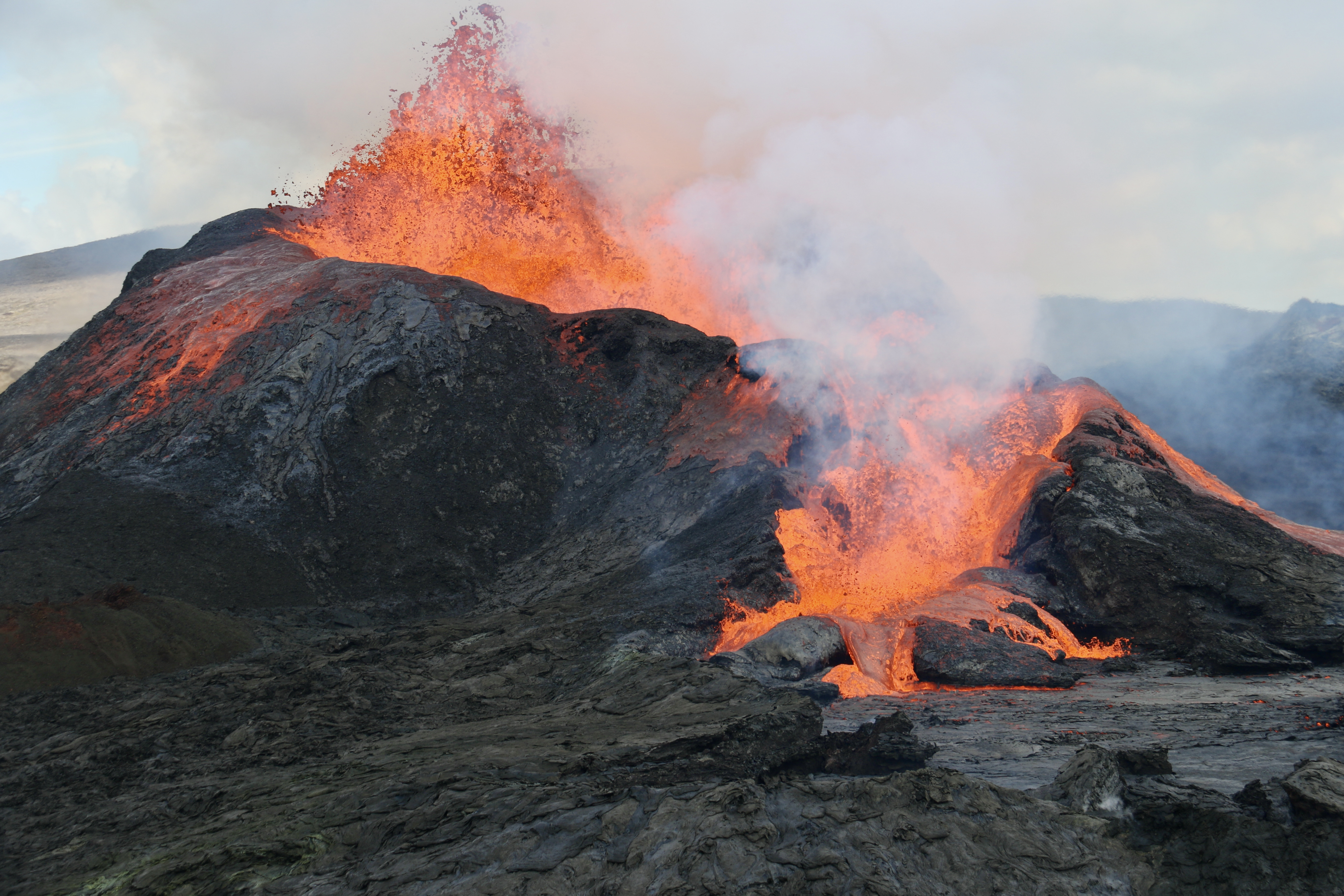
The Fagradalsfjall, Iceland, eruption event began in March 2021 and concluded 6 months later. Credit: Birgir V. Óskarsson
Researchers used satellites and aerial data to create regularly updated maps of the Fagradalsfjall eruption for both the public and disaster response agencies.
On 19 March 2021, the volcano Fagradalsfjall began to erupt, suggesting that volcanoes on Iceland’s Reykjanes Peninsula had awakened from an 800-year slumber. Although most volcanism in Iceland occurs in regions far from population centers, eruptions on the Reykjanes Peninsula can threaten residents.
“Basically, Fagradalsfjall is in the backyard of the capital of Iceland, Reykjavik,” said Gro B. M. Pedersen, a researcher at the University of Iceland. “The peninsula is a rather pristine, young region of Iceland.”
Pedersen and a team of scientists came together to create maps to prepare the public for the evolving events. These mapping efforts were recently published in Geophysical Research Letters.

 EarthSpin