A new study finds the lofted pollutants came from major European cities, but further study is required to fully understand the plastics’ transport and deposition processes.
Plastics are ubiquitous, with more than 350 million tons produced worldwide every year. The far-reaching effects of synthetic materials are also in the news, from the pile of garbage circulating in the Pacific to elephants dying from consuming nondegradable plastic waste. Now, a new study from an international team of researchers found tiny plastic particles high in the Alps.
Pervasive Plastics
Since plastics do not have a permanent environmental sink, they continue to degrade, becoming smaller until they are considered nanoplastics, which are 100 times thinner than a human hair. These fragments of plastic are tiny enough to be carried aloft and distributed by the wind. However, data on the distribution and concentration of nanoplastics are rarely reported.
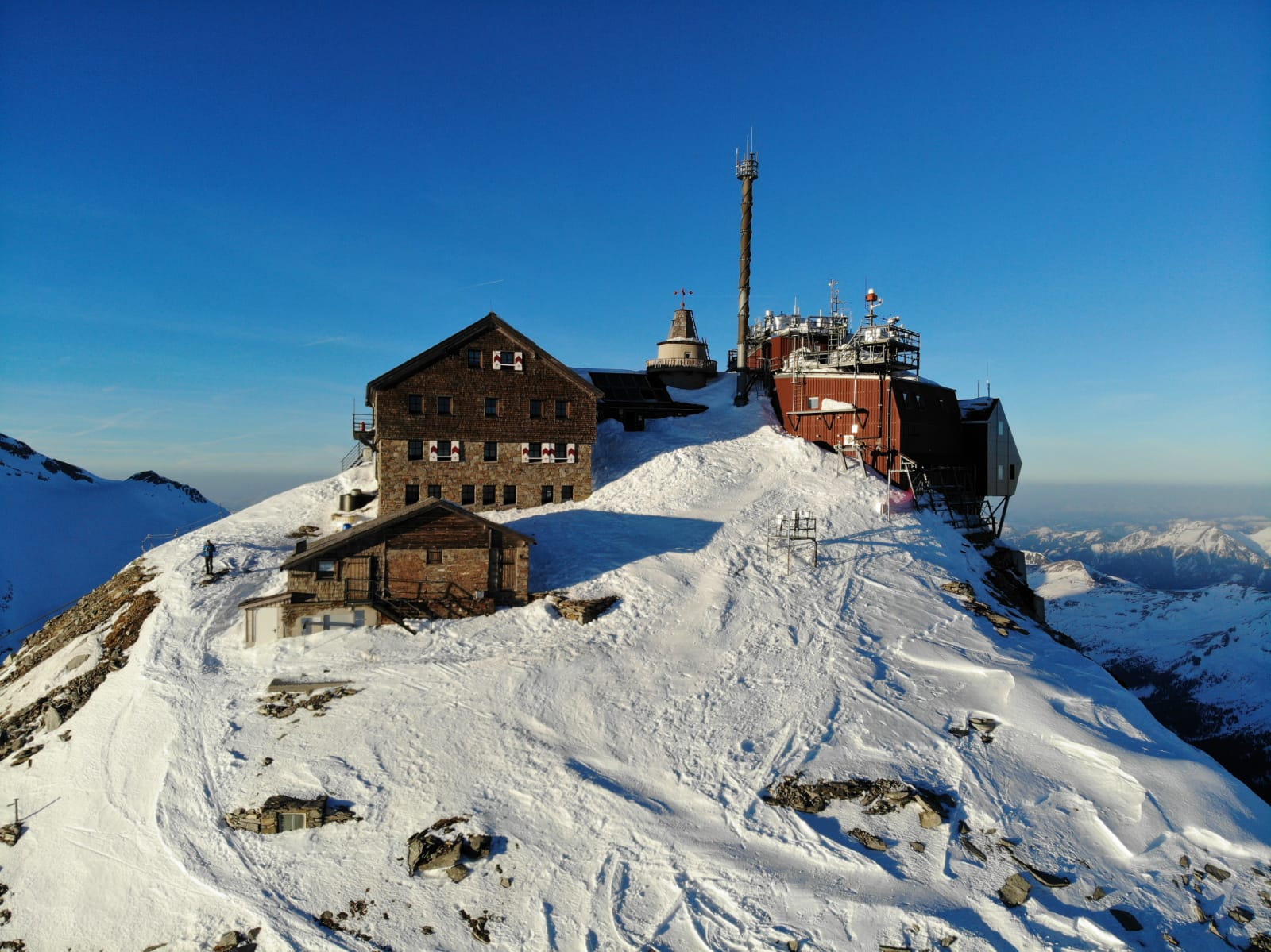
Dušan Materić, a researcher at Utrecht University in the Netherlands, and colleagues were interested to see if nanoplastics were present in high-altitude, remote places, like the Alps. So they gathered 38 samples at Sonnblick Observatory from February to March in 2017. The observatory sits on a remote peak in the Austrian Central Alps, more than 3,100 meters above sea level. They focused on four commonly used plastics: polypropylene (PP), polyethylene terephthalate (PET), polyethylene (PE), and polystyrene (PS). The team used thermal-desorption proton-transfer-reaction mass spectrometry to measure and identify the tiny particles in the samples they collected. After analyses, the results were compared to 40 unique ions identified from new plastic exemplars.
(more…) EarthSpin