Researchers in Spain monitored variations in seismic noise across Barcelona as the city locked down during the pandemic, clarifying the seismic band associated with human activity.
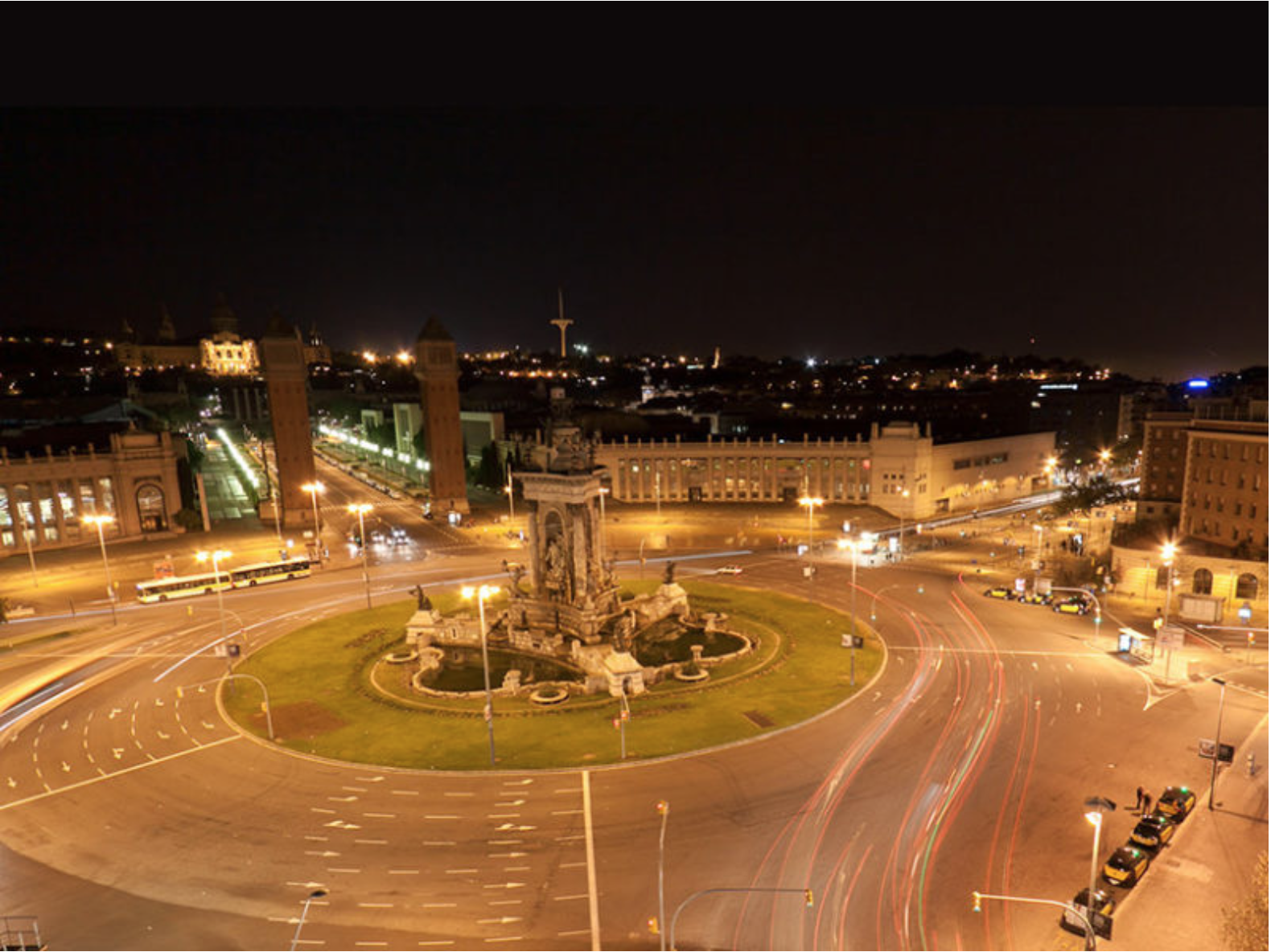
In March 2020, countries around the world began to shut down to slow the spread of the coronavirus. Although the measures were preventative and protective, they also offered scientists an opportunity to evaluate how this drastic change rippled throughout the environment. Within a few weeks of the initial lockdown, Spanish scientists recorded a significant reduction in air pollution. Jordi Díaz, part of the scientific staff at Geociencias Barcelona–Consejo Superior de Investigaciones Científicas, and his team used this unique period to create a baseline for seismic noise in urban areas.
In September 2019, seismologists established a network of 14 temporary seismic sensors along with 5 permanent sensors (all placed 2 to 3 kilometers apart from one another) across Barcelona to evaluate different methods to capture ambient noise. What they did not anticipate was that the network would monitor the level of seismic vibrations during this remarkable period in human history. The study offers insight into how seismic monitors could be used to monitor human movement to understand economic activity. The results are available in a special issue of the journal Solid Earth.
“When you hear a piece of music, you do not isolate the strings or the percussion; you hear the whole thing,” said Díaz, lead author on the paper. “Like music, a seismic record is composed of vibrations from many different sources—traffic, earthquakes, ocean waves. We were curious if we could identify changes in the seismic data produced by human activity during lockdown.”
(more…)
 EarthSpin