A method using nonpooled, continuous stable carbon and oxygen isotopes recorded in oak trees benefits climate reconstructions.
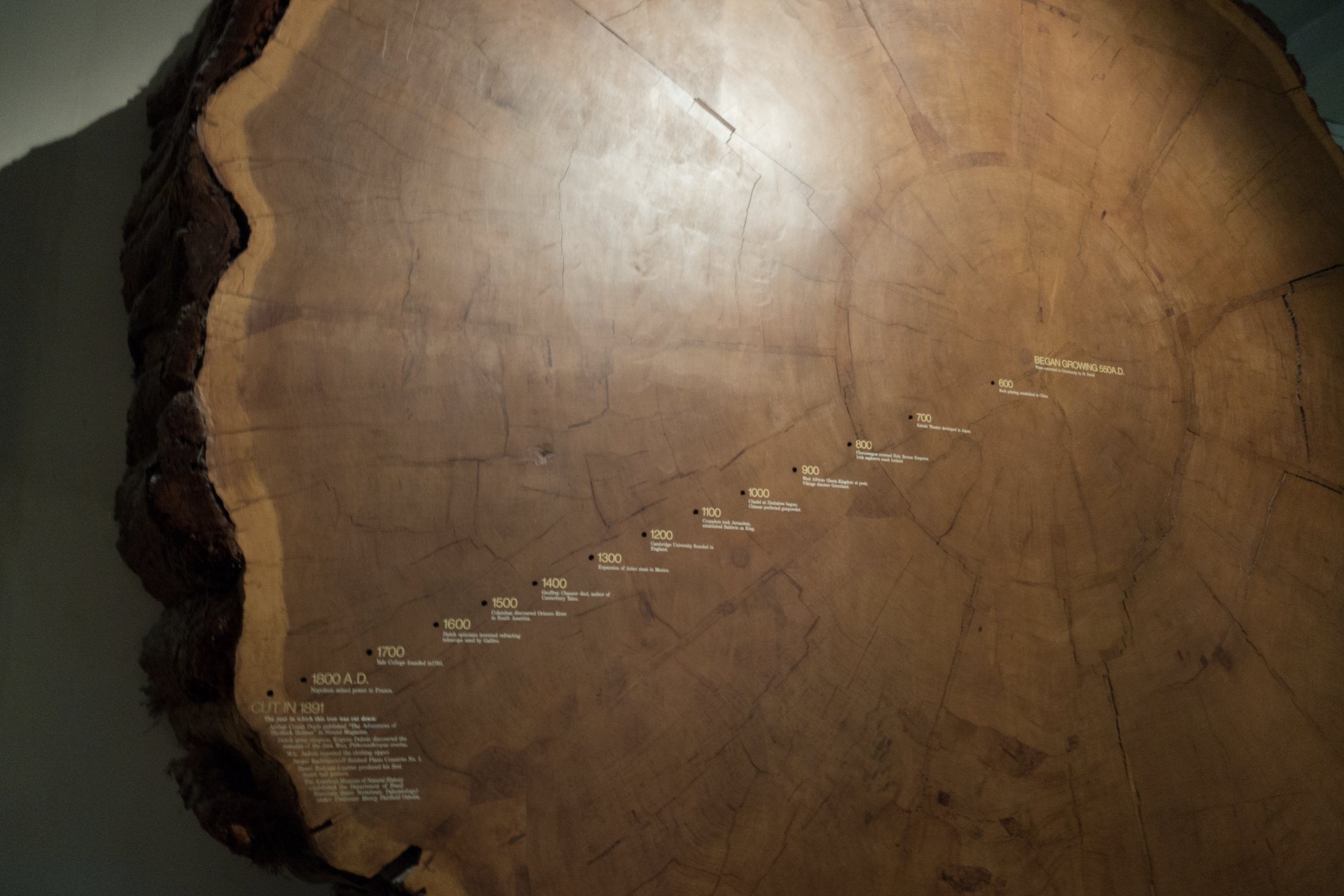
For decades, the widths of tree rings have offered a precise window into past regional environmental conditions. The oxygen (δ18O) and carbon (δ13C) isotopic signatures of wood cellulose provide an additional, nuanced environmental fingerprint that records subtle shifts in temperature, precipitation, and drought conditions.
Despite the power of this approach, questions remain as to how tree species, site elevation, tree age, and preservation techniques could affect the stable isotopic values captured in the individual samples.
“To reconstruct multimillennial chronologies, samples from living trees, historical timbers, archaeological remains, and subfossil materials have to be combined,” said Otmar Urban, a scientist at the Global Change Research Institute, Czech Academy of Sciences, and first author of a new study on the value of stable isotopes in individual trees. “It could bring problems, because [this information] is usually unknown.”
To address these uncertainties, the researchers developed a new method to evaluate the variability in the stable isotopic record in individual trees. They leveraged a multimillennial tree ring chronology established in the Czech Republic, consisting of about 4,000 core samples obtained from living oaks and historical timbers of the same species. This database provides a mechanism to reconstruct climate conditions across central Europe over the past 1,500 years. The results of the study were published in the February issue of Dendrochronologia.
Worst Summer Droughts in 2,000 Years
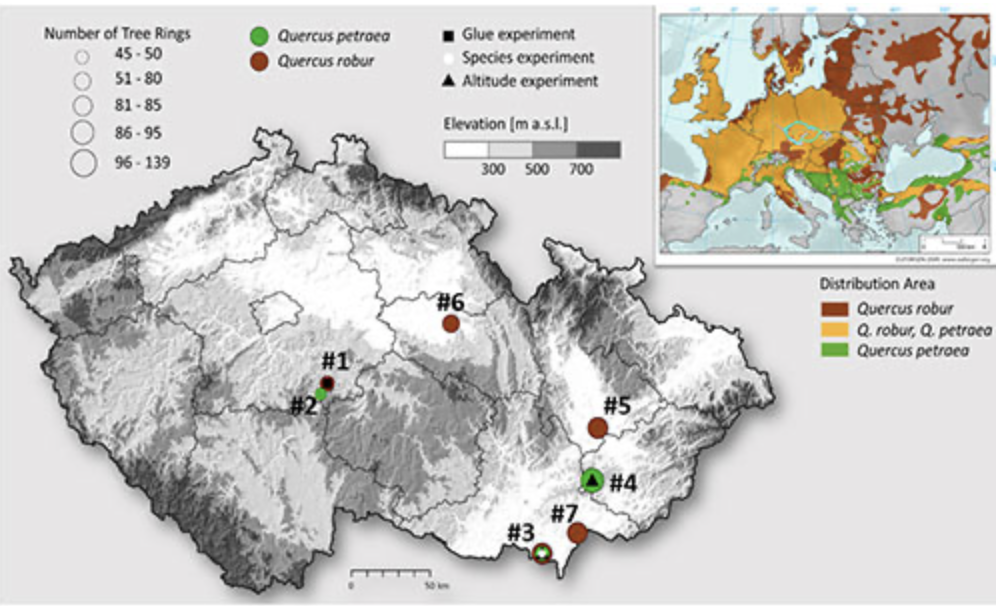
The team obtained 21 cores from living oak trees from seven locations across the Czech regions of western Bohemia and eastern Moravia.
The samples consisted of two species of oak, English oak (Quercus robur) and sessile oak (Q. petraea), spanning the natural elevations of each species across central Europe. The researchers grouped samples as low elevation (170–250 meters above sea level) and high elevation (450–495 meters above sea level). In addition, samples were grouped as young (<98 years old) and old (149–198 years old). Finally, the team examined how a common preservation method, polyvinyl acetate, could affect the stable isotopic signatures preserved in the tree samples.
The team found that the stable carbon and oxygen isotopic values recorded in the two oak species were similar despite differences in elevation and age. The team also found that the polyvinyl acetate did not bias the isotopic results when the cellulose is suitably extracted.
Unlike pooled samples, which reduce cost and analysis times, nonpooled samples, like the method detailed in this study, reflect the nuance of the stable isotopic record in individual trees. The researchers found that older oak wood samples can be combined to improve stable isotope chronologies for long-term, isotope-based paleoclimatic reconstructions.
“Such multimillennial reconstruction would be impossible without previous confirmation of the suitability to combine separate wood samples,” said Urban. “Our data set can further be used as a part of a larger archive for regional to large-scale dendroclimatic investigation with the possibility to extend the data set into the past when new samples are available.”
To prove this point, the team applied this approach in a subsequent study in Nature Geoscienceusing 147 samples from living and dead European oaks. They were able to reconstruct hydroclimate conditions in central Europe over the past 2,110 years. In particular, they found that recent summer droughts, between 2015 and 2018, have been the most severe throughout the past 2 millennia.
“The study from Otmar Urban contributes valuable methodological insights in the development of nonpooled chronologies of tree ring stable isotopes. From my personal perspective, by combining carbon and oxygen isotopes from tree rings, it is possible to infer how atmospheric humidity and the vapor pressure deficit have changed in the past,” said Hugo de Boer, an assistant professor of global environmental change at Utrecht University, Netherlands, who did not contribute to the project. “If we can develop better chronologies of trees in terms of carbon and oxygen isotopes, we can also reconstruct changes in photosynthesis and transpiration to better understand how trees responded to more recent climate change during the 20th century.”
 EarthSpin