With a temperature sensor in hand, researchers can engineer crops that produce yields in warmer climates.
When it gets hot outside, humans and animals have the luxury of seeking shelter in the shade or cool, air-conditioned buildings. But plants are stuck.
While not immune to changing climate, plants respond to the rising mercury in different ways. Temperature affects the distribution of plants around the planet. It also affects the flowering time, crop yield, and even resistance to disease.

“It is important to understand how plants respond to temperature to predict not only future food availability but also develop new technologies to help plants cope with increasing temperature,” said Meng Chen, Ph.D., associate professor of cell biology at the University of California, Riverside.
Scientists are keenly interested in figuring out how plants experience temperature during the day, but until recently this mechanism has remained elusive. Chen is leading a team to explore the role of phytochrome B, a molecular signaling pathway that may play a pivotal role in how plants respond to temperature.
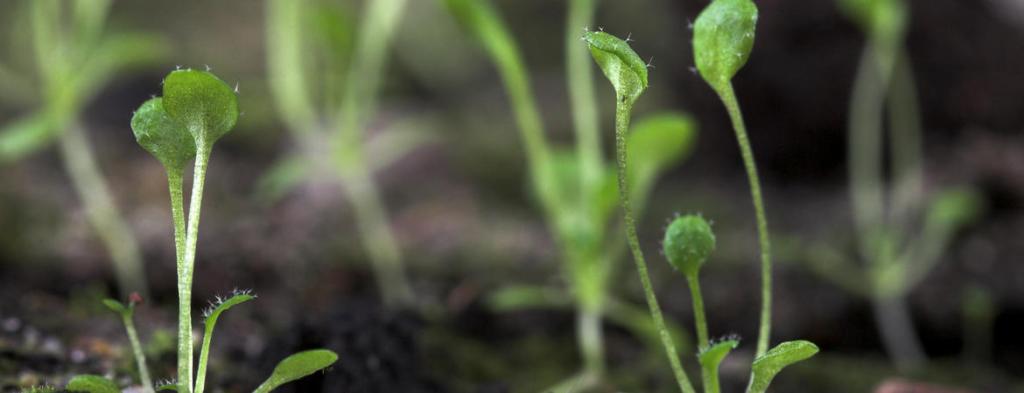
In a paper published in Nature Communications, Chen and colleagues at UCR describe the genetic triggers that prepare plants for growth under different temperature conditions using the model plant, Arabidopsis.
Plants grow following the circadian clock, which is controlled by the seasons. All of a plant’s physiological processes are partitioned to occur at specific times of day.
According to Chen, the longstanding theory held that Arabidopsis senses an increase in temperature during the evening. In a natural situation, Arabidopsis, a winter plant, would probably never see higher temperature at night.
“This has always been puzzling to us,” said Chen, senior author on the paper. “Our understanding of the phytochrome signaling pathway is that it should also sense temperature during the daytime, when the plant would actually encounter higher temperature.”
In fact, Arabidopsis grows at different times of day as the seasons change. In the summer, the plant grows during the day, but during the winter it grows at night. Previous experiments that mimicked winter conditions showed a dramatic response in phytochrome B, but experiments that mimicked summer conditions were less robust.
Chen and his team decided to examine the role of phytochrome B in Arabidopsis at 21 degrees Celsius and 27 degrees Celsius under red light. The monochromatic wavelength allowed the team to study how this particular plant sensor functions without interference from other wavelengths of light.
“Under these conditions, we see a robust response,” Chen said. “The work shows that phytochrome B is a temperature sensor during the day in the summer. Without this photoreceptor, the response in plants is significantly reduced.”
Beyond identifying the function of phytochrome B, Chen’s work also points to the role of HEMERA, a transcription activator that turns on the temperature-responsive genes that control plant growth.
“We found the master control for temperature sensing in plants,” Chen said. “HEMERA is conserved in all plants, from moss to flowering plants.”
In essence, Chen and his team identified the genetic mechanism used by all plants as they respond to daylight conditions as well as the ability to sense temperature.
Chen acknowledges that not all plants may respond in the same way as Arabidopsis in this study. Before this research could be applied, it may be necessary to understand how this temperature-signaling pathway behaves in different plant systems. Chen believes the pathway is probably similar for all plants and may only require minor modifications.
The research team hopes to expand on this study by adding more complexity to future experimental designs, such as exploring the response of the signaling pathway under white light or diurnal conditions. Chen would also like to examine how other plant systems use HEMERA to experience temperature.
“To cope with rapid temperature changes associated with global warming, we may have to help nature to evolve crops to adapt to the new environment,” Chen said. “This will require a molecular understanding of how plants sense and respond to temperature.”
The paper, titled Daytime temperature is sensed by phytochrome B in Arabidopsis through a transcriptional activator HEMERA, was published in the December issue of Nature Communications. In addition to Chen, collaborators at UC Riverside include: Yongjian Qiu, Meina Li, Ruth Jean-Ae Kim, and Carisha M. Moore. The study was funded by the National Institute of General Medical Sciences.
Content originally published on the University of California, Riverside website: http://news.ucr.acsitefactory.com/articles/2018/12/04/scientists-identify-how-plants-sense-temperature
 EarthSpin