Feeds:
Posts
Comments

Archive for June, 2014

Nothing says summer like a ripe, juicy slice of watermelon on a hot day. However, this important summertime fare is under assault and may not even make it to the table; a tiny pathogen is ravaging crops, causing the rind to weaken and allowing the fruit to ooze out into the field.

The disease, called watermelon fruit blotch, accounts for losses of up to 90 percent of marketable yield in some watermelon fields. Fruit blotch was first detected in Florida in 1989. Since that time, it has migrated along the eastern seaboard and into Indiana, affecting 11 states. The rapid migration and expansion of this disease may lie in its seeds.
(more…)

Read Full Post »

Lots of folks fancy a cup of tea when they need a pick-me-up – orange pekoe, Darjeeling, etc.  Not surprisingly, a spot of tea can help plants feel better, too.  But not just any tea; if you want to share a pot with your plants, you’ll need to brew up some earthworm tea.

This beverage, which has become all the rage in organic agriculture, is not made from earthworms. No, this tea is made from earthworm excrement steeped in liquid. Earthworm tea is easier to transport and apply to crops than other types of fertilizers, and plants love it.

(more…)

Read Full Post »

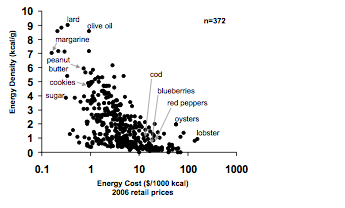
Screen shot 2014-06-09 at 4.07.12 PMRecent studies show that the cost of high-calorie foods are less likely to be affected by inflation and, on average, cost less than low-calorie foods. With obesity plaguing the United States, this trend may hinder low-income families from adopting a low-calorie diet. Funding from USDA’s Cooperative State Research, Education, and Extension Service (CSREES) enabled researchers at the University of Washington to examine the price trends of different food choices.

(more…)

Read Full Post »

Cyst nematodes are menacing, microscopic roundworms that infect and feed on the root cells of many important agricultural crops. One species of cyst nematode, Heterodera glycines, feeds on soybean crops, resulting in up to $1 billion in crop loss in the United States each year. Recent research, funded by USDA’s Cooperative State Research, Education, and Extension Service (CSREES), is uncovering the mechanisms used by this nematode to weaken the plant’s defense system.

Recent work by scientists at the University of Missouri (UM) and Iowa State University (ISU) is featured on the cover of the March issue of the journal Molecular Plant-Microbe Interactions. The results from their studies may lead to more effective management tools to combat the agricultural pest and protect this vital U.S. crop.

(more…)

Read Full Post »

« Newer Posts - Older Posts »