Everyone watches the nightly news to prepare for the upcoming week’s weather. No matter how we prepare, the forecasts sometimes fall short of actual events. But weather prediction is a complex problem. Meteorologists have to take into account pressure systems, wind strength and direction, water vapor, temperature conditions at the ground and in the atmosphere, and much more. Predicting climate conditions in the next century as the Earth’s climate changes is also a challenge. Having more and better observations is essential to improving both weather and climate forecasts.
Archive for June, 2014
Past Weather Conditions Provide Insight for Future Predictions
Posted in Climate, tagged climate change, computer models on 06/09/2014|
Soybean – The Wonder Legume
Posted in Food, Genetics, tagged bioenergy, genome, soybean on 06/09/2014|
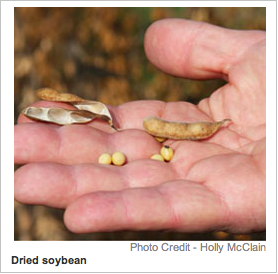 Soybean is an interesting plant. It provides a valuable protein source for human and animal consumption, it is an important feedstock for biodiesel production, and it interacts with soil-borne bacteria (Rhizobia) that capture atmospheric nitrogen and store it in the soil, a beneficial side-effect utilized during crop rotation. In an effort to unlock the full power of this plant, scientists have sequenced the soybean genome.
Twinkle Twinkle Superstar
Posted in Physics, tagged dark energy, standard candle, supernova on 06/09/2014|
 The magnificent light display in the evening sky has inspired artists, explorers, and dreamers for generations. Scientists are also intrigued by stars, but they use these celestial bodies to illuminate their understanding of the origin of the universe.
“Today, thanks to an array of powerful tools and clever experiments, the stars are telling us more than ever about the evolution of the universe and the creation of the elements needed for life,” said lead author Daniel Kasen of the University of California, Santa Cruz.
Fungi Aid Biofuel Production
Posted in Climate, tagged biofuel, enzymes, fungi on 06/09/2014|
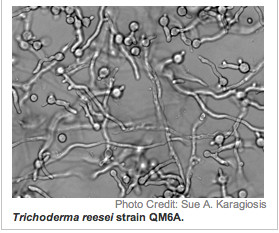 Trichoderma reesei, a fungus found in soils throughout the world, produces a cellulose-degrading enzyme to break down plant material in order to obtain nutrients.
“Unlike animals that produce enzymes in the gut to breakdown food, fungi secrete enzymes into their environment to break down the surrounding carbon and nitrogen so it can absorb the nutrients as food,” said the study’s lead author Scott Baker.
The fungus frustrated army officials in the South Pacific theatre during World War II, because enzymes accelerated the disintegration of the cotton fabric in the fatigues and tents.
 EarthSpin