Feeds:
Posts
Comments

Archive for June, 2014

High blood pressure plagues slightly more than a quarter of the world’s adult population, and the numbers are expected to increase. How can people manage their blood pressure? Are pills the answer? The best solution may lie in your refrigerator’s crisper.

Previous work showed the relationship between diet and blood pressure. A diet rich in vegetables and fruit produced lower blood pressure readings, but the studies did not differentiate between cooked and raw vegetables. The cooking process alters the chemical composition and nutritional value of vegetables.

A recent study published in the Journal of Human Hypertension, which was led by scientists at the School of Public Health, Imperial College London, examined the impact of raw and cooked vegetables on blood pressure.
(more…)

Read Full Post »

FSIS Mission Book

Screen shot 2014-06-09 at 5.50.45 PMI wrote and helped design the USDA Food Safety and Inspection Service (FSIS) mission book. FSIS is the public health agency in the U.S. Department of Agriculture (USDA) and is responsible for ensuring that meat, poultry, and processed egg products are safe, wholesome, and accurately labeled.


View the entire book at http://www.fsis.usda.gov/wps/wcm/connect/7a35776b-4717-43b5-b0ce-aeec64489fbd/mission-book.pdf?MOD=AJPERES

Read Full Post »

Screen shot 2014-06-09 at 4.43.29 PMLet me tell you a tale of war, influenza, and strange climate events that are sure to set your hair on end. But this is not a fictional story to scare and entertain; it is a historical reality that, with the work of scientists at the University of Colorado, Boulder, Texas A&M University, and the University of Maryland has been clearly established.

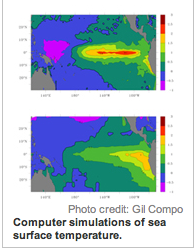
The story begins in late 1917. The Great War was dragging into its fourth year in Europe and Russia. An influenza pandemic began draping a curtain of death across the world. Four countries became embroiled in revolutions, and India experienced the worst drought on record. This last event–and perhaps some of the others–may have been influenced by an inconspicuous warm patch of water in the central equatorial Pacific Ocean, where a strong El Niño began to brew.

(more…)

Read Full Post »

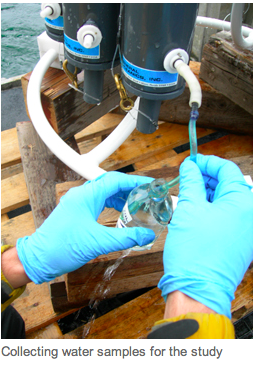
Screen shot 2014-06-09 at 4.40.33 PMThe ocean is teeming with life. But this life teeters on the delicate balance between the creation and destruction of organic carbon. Like green plants on land, algae and bacteria in the surface waters of the ocean combine nutrients, water, and carbon dioxide in the presence of sunlight to fix organic carbon in the form of biomass. This organic carbon, directly or indirectly, provides food for all life in the ocean and is a key part of the carbon cycle.

In regions of the ocean where water circulation is constrained and nutrient input is high the consumption of organic carbon results in severe oxygen depletion producing an oceanic feature known as an oxygen minimum zone (OMZ). Without oxygen, organisms living in these zones suffocate or migrate away, leaving the region a ‘dead zone.’ Global warming is thought to exacerbate this process, allowing OMZ ‘dead zones’ to grow in volume and intensity with potentially harmful consequences to life in the ocean and the health of the planet – at least as we know it.

(more…)

Read Full Post »

Older Posts »